

A stronger core can make everyday movement feel easier, but it cannot choose where your body loses fat.
That distinction matters. Planks, bird dogs, and other core exercises can strengthen the muscles around your abdomen, back, hips, and pelvis. They cannot selectively burn fat from your waist.
Cleveland Clinic obesity specialist Scott Butsch, MD, explains the limitation clearly:
“You can’t specifically target where fat is lost from.”
Core work still has plenty of value. The goal is simply different: better strength, stability, control, and movement, not promising a smaller waist from seven exercises alone.
Photo by Vitaly Gariev on Unsplash
Your Core Is More Than Your Abs
When people hear “core,” they often think only about the visible abdominal muscles.
In a Cleveland Clinic Q&A, physical therapist Patti Mariano Kopasakis, PT, DPT, SCS, explains that the core also includes the obliques, deeper abdominal muscles, back muscles, diaphragm, pelvic floor, hip flexors, and glutes.
That is why a useful core routine includes more than crunches.
1. Modified Plank
Start on your forearms and knees.
Keep your shoulders above your elbows and your body in a straight line from your head through your hips. Gently tighten your abdomen without holding your breath.
Start with: 15–20 seconds.
Make it harder: Progress to your toes when you can maintain good form.
2. Side Plank
Lie on your side with your elbow underneath your shoulder.
For the beginner version, keep your bottom knee bent and lift your hips gently away from the floor.
You should feel the muscles along the side of your trunk working without twisting your spine.
Start with: 10–20 seconds per side.
3. Bird Dog
Begin on your hands and knees.
Extend one arm forward and the opposite leg behind you while keeping your hips as level as possible. Return slowly, then switch sides.
The goal is not to lift your arm and leg as high as possible. It is to resist wobbling and keep your trunk controlled.
Mayo Clinic includes bird dogs, modified planks, and side planks among exercises that can strengthen the core muscles.
4. Dead Bug
Lie on your back with your knees bent and lifted and your arms pointing toward the ceiling.
Slowly lower one arm and the opposite leg while keeping your trunk controlled, then return to the starting position.
If your lower back begins arching strongly, shorten the movement.
Try: 6–10 controlled repetitions per side.
5. Glute Bridge
Lie on your back with your knees bent and feet on the floor.
Tighten your abdomen gently, press through your feet, and lift your hips until your shoulders, hips, and knees form a comfortable line.
Pause briefly, then lower slowly.
Glute bridges train more than the glutes. They also ask the trunk and pelvis to stay stable while the hips move.
6. Slow Mountain Climbers
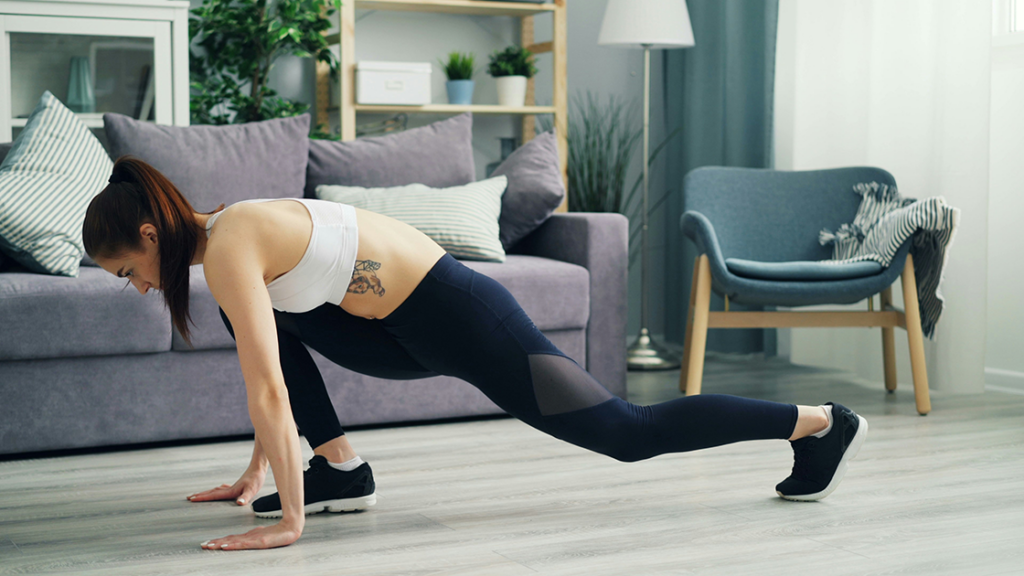
Begin in a high plank with your hands beneath your shoulders.
Bring one knee toward your chest, return it, then switch sides.
Move slowly enough that your hips do not swing from side to side.
Make it easier: Place your hands on a sturdy countertop instead of the floor.
7. Squats With Core Control
Stand with your feet comfortably apart.
Send your hips back and bend your knees as though sitting toward a chair. Keep your trunk controlled as you lower and stand again.
Squats are not an “ab exercise,” but your core has to stabilize your trunk while your hips and legs move.
That is much closer to how core strength is used in everyday life.
A Simple Beginner Core Routine
Try:
- 8–10 bird dogs per side
- 8–10 dead bugs per side
- 10–12 glute bridges
- 20-second modified plank
- 15-second side plank per side
- 8–10 slow mountain climbers per side
- 10–12 squats
Complete one or two rounds, two or three times per week.
If you prefer a shorter structured session, our 10-minute no-equipment workout for women gives you a complete full-body routine.
Core Training Does Not Replace Overall Activity
Strong abdominal muscles can exist underneath body fat. Core exercises alone do not determine waist size.
Overall body composition is influenced by many factors, including genetics, nutrition, physical activity, sleep, age, and hormonal changes.
The CDC recommends that adults work toward at least 150 minutes of moderate-intensity activity each week plus muscle-strengthening activity on two or more days. Core training can be part of those strength sessions, but it should not be the entire program.
Our daily movement routine for women shows how walking and shorter movement breaks can fit around structured workouts.
What About Nutrition?
You do not need a special “flat belly” diet.
Regular meals with protein, fiber-rich carbohydrates, vegetables or fruit, and healthy fats can support overall nutrition without turning your waist measurement into the only goal.
For a practical approach, see our guide to building balanced meals.
When to Modify or Stop
Core work should feel challenging, but it should not cause sharp back, neck, hip, or pelvic pain.
Stop or modify an exercise if you cannot maintain control or if pain appears. If you already have persistent back pain, osteoporosis, a recent injury, pelvic-floor symptoms, or another condition that affects exercise, individualized advice from a healthcare professional or physical therapist may be more useful than copying a routine online.
Final Thoughts
Core exercises can make your midsection stronger. They can improve stability and make movements such as lifting, walking, exercising, and getting up from the floor feel more controlled.
What they cannot do is decide where your body loses fat.
So measure progress by more than the mirror: a longer plank, steadier bird dog, better control, or simply feeling stronger during everyday movement are all worthwhile results.
Which core exercise feels most comfortable for you right now?
Maybe bird dogs feel natural while side planks are still challenging, or perhaps you prefer standing and full-body movements.
Share what works for you in the comments below — your experience may help another woman find a good place to start.