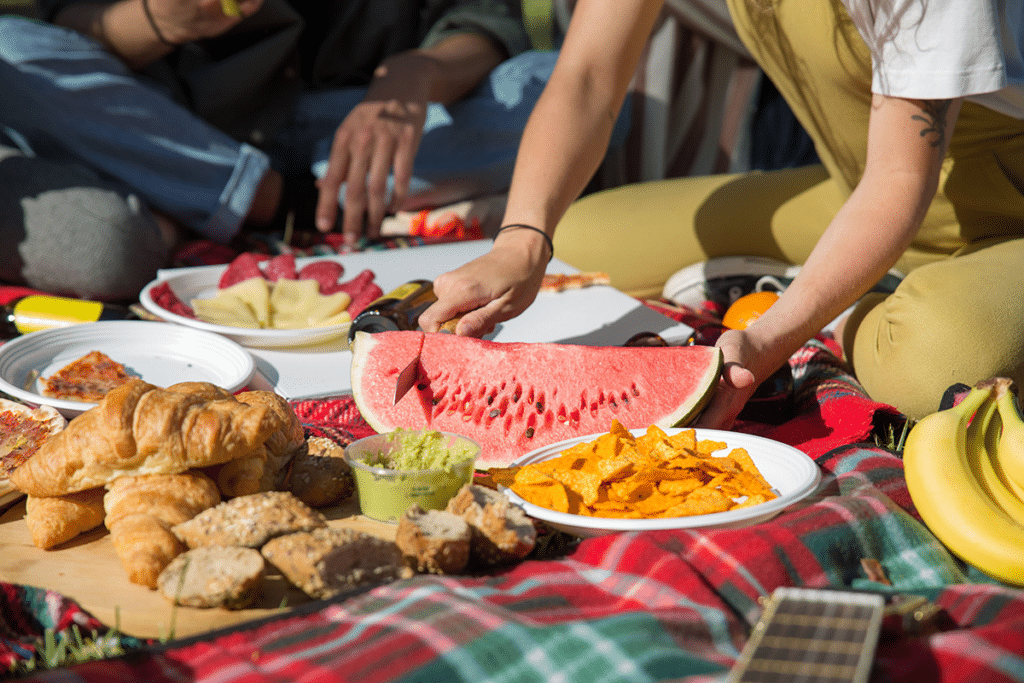
You cut a few slices of watermelon, add some bread, and wonder whether the combination is better for your blood sugar. It can be an enjoyable snack, but the answer depends on the portions and the rest of the plate.
Watermelon with bread adds together two sources of carbohydrate. Choosing a bread with more fiber and adding protein may make the snack more satisfying, but bread does not cancel out the fruit’s sugar.
Photo by Kampus Production on Pexels
In This Article
What Watermelon Adds to Your Snack
Watermelon is mostly water. A 100 g serving provides about 7.5 g of carbohydrate and only 0.4 g of fiber, with little protein or fat. Cleveland Clinic dietitian Lara Whitson, RD, LD, emphasizes portion size when considering its effect on blood sugar.
It can contribute to hydration and fit into a balanced eating pattern. How full you feel afterward also depends on what else you eat.
Does Watermelon With Bread Help Blood Sugar?
Fullness and glucose response are separate questions. Bread adds starch as well as any fiber it contains, so adding it does not guarantee a smaller glucose rise.
The CDC explains that eating carbohydrates with protein, fat, or fiber can slow how quickly blood sugar rises. That general principle supports building a balanced snack; it does not establish watermelon and bread as a special treatment.
How Much Watermelon Is a Portion?
In a Mayo Clinic expert Q&A, the question is whether sweet fruits must be avoided with diabetes. The answer emphasizes carbohydrate amount and serving size rather than sweetness alone.
USDA data for raw watermelon provide a useful reference:
| Portion | Approximate carbohydrate |
|---|---|
| 1 cup diced, about 152 g | 11–12 g |
| 200 g, about 1⅓ cups | 15 g |
If you count carbs, count the whole snack. If your bread label lists 15 g of carbohydrate per slice, that slice plus 200 g of watermelon provides about 30 g before toppings.
Check whether the bread label’s serving is one slice or two. Use the total carbohydrate figure, which includes starch and sugar, rather than checking sugars alone.
A portion is a planning tool. These examples are not a prescribed amount for everyone. Your appetite, meal plan, activity, and medical needs can change the amount that fits.
A More Filling Way to Pair It
Choose the foods you enjoy, then consider what each one contributes:
- Whole-grain toast with cottage cheese, with watermelon on the side.
- Toast with peanut butter and a portion of watermelon.
- Watermelon with plain Greek yogurt or nuts when you do not want bread.
You can also enjoy watermelon on its own. Pairing it with other foods is an option when you want a more substantial snack.
Toppings can add carbohydrate too, so use their labels if you count carbs. For more ideas, explore our healthy snacks for women.
Try This Today
Measure one cup of diced watermelon into a bowl once, then notice how that amount looks in your usual dish. Use it as a portion reference when planning your snack.
When Individual Advice Matters
If you have diabetes, use your agreed carbohydrate goals and glucose-monitoring plan. Discuss readings that repeatedly fall outside your targets with your care team.
Watermelon can fit some kidney diets, but large portions may be unsuitable when potassium or fluids are restricted. DaVita’s kidney diet guidance highlights both considerations. Ask your renal dietitian how the fruit, bread, and toppings fit your particular plan.
Frequently Asked Questions
Is rye bread automatically a whole-grain choice?
Check the ingredients rather than relying on the name or color. The University of Florida’s whole-grain guide recommends looking for a whole grain, such as whole wheat or whole rye, as the first ingredient.
Is watermelon juice the same as eating the fruit?
A glass can contain more watermelon than you would normally serve as pieces, and sweeteners add further carbohydrate. If you count carbs, include the actual amount of watermelon and any additions.
Final Thoughts
Watermelon with bread can fit into a satisfying snack. The useful questions are how much carbohydrate the whole snack contains, what else it contributes, and whether it suits your needs.
You can apply the same approach when you build a balanced plate without counting calories. Enjoy the combination for its taste and convenience, with realistic expectations about blood sugar.
Have you tried watermelon with bread?
Share the combination you enjoy most, whether it includes toast, yogurt, cheese, or nuts.
Leave your favorite snack idea in the comments below.