

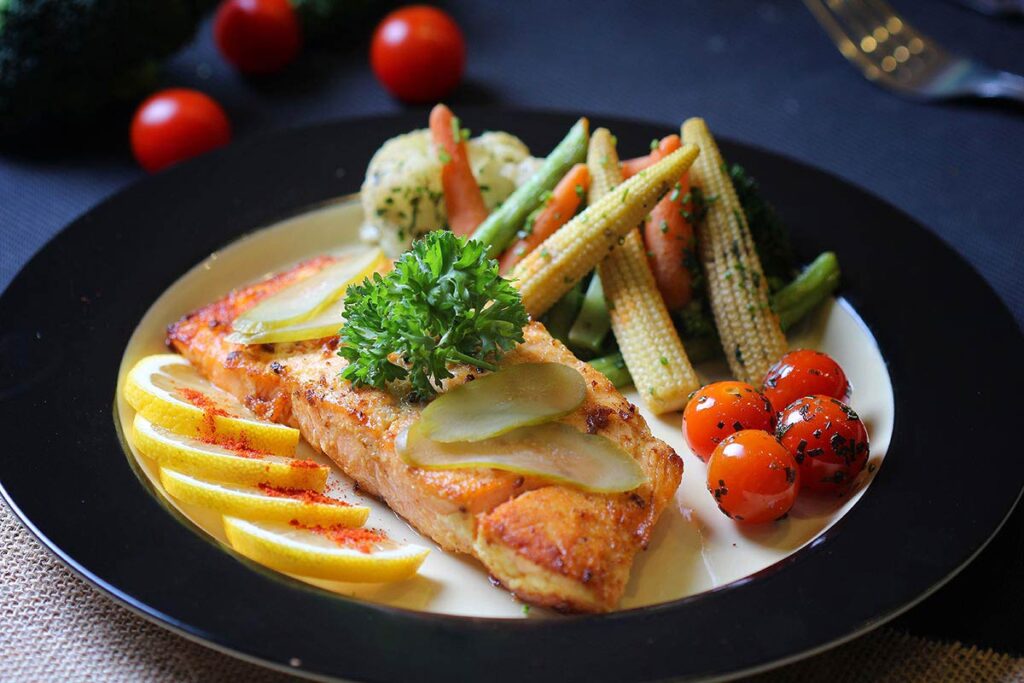
Salmon is one of those foods that sounds healthy before you even put it on the plate.
But once you start thinking about omega-3s, mercury, wild versus farmed fish, and portion sizes, a simple dinner can suddenly feel complicated.
The good news: you do not need salmon every day to benefit from it.
Image credit: Photo by Shameel Mukkath on Pexels
How Often Should You Eat Salmon?
The American Heart Association recommends two servings of fish per week, especially fatty fish such as salmon. A serving is about 3 ounces cooked.
That does not mean both servings have to be salmon. Variety matters, so salmon can share the week with sardines, trout, shrimp, or another seafood you enjoy.
For many women, one or two salmon meals a week is a realistic way to include omega-3-rich fish without turning dinner into another nutrition rule.
Why Is Salmon So Good for You?
Salmon provides high-quality protein along with EPA and DHA omega-3 fatty acids, vitamin B12, selenium, and vitamin D.
Omega-3 fats are especially well known for their role in cardiovascular health. Salmon is also a satisfying protein choice, which can help turn vegetables and a carbohydrate into a more complete meal.
You can find more satisfying options in Foods That Help You Feel Full Longer and Support Steady Energy.
It is nourishing, but it is not medicine in food form. The bigger picture still matters: vegetables, whole grains, legumes, fruit, healthy fats, and variety across the week.
For more everyday food ideas, explore What to Eat for Energy: 12 Foods That Boost Your Day.
A Real-Life Question About Eating Less Meat
A Mayo Clinic reader once asked how to cut back on red meat without losing too much protein.
The answer was reassuringly practical: protein does not have to come from red meat alone. Fish was suggested as one alternative, with salmon specifically mentioned as an omega-3-rich choice.
That is probably the most useful way to think about salmon — not as another food you “must” eat, but as one delicious way to vary your protein sources.
On meat-free days, Are Lentils Good for You? Benefits for Fullness, Energy, and Digestion explores another practical protein option.
What About Mercury?
Salmon is on the FDA’s “Best Choices” list for fish lower in mercury.
That makes it a useful option even during pregnancy and breastfeeding, when mercury choices deserve extra attention. The FDA advises women who are pregnant or breastfeeding to eat two to three servings per week from its lower-mercury “Best Choices” category.
Individual medical needs can differ, so pregnancy or specific health conditions are good reasons to discuss seafood choices with your healthcare provider.
Wild or Farmed Salmon?
You do not need to treat farmed salmon as a “bad” food.
Both wild and farmed salmon provide protein and omega-3s, although their nutrient profiles differ somewhat. Choose according to availability, budget, taste, and the quality you can realistically buy.
Frozen salmon is also perfectly practical for weeknight meals. Keeping a few portions in the freezer can make fish night much easier to actually happen.
Easy Sheet-Pan Salmon With Broccoli and Sweet Potato
Ingredients
- 2 salmon fillets
- 1 medium sweet potato, cut into small wedges
- 2 cups broccoli florets
- 1 tablespoon olive oil
- 1 lemon
- Black pepper
- Garlic powder or dried herbs
Directions
Heat the oven to 425°F (220°C). Toss the sweet potato with half the olive oil and roast for about 15 minutes.
Add the broccoli and salmon to the pan. Drizzle with the remaining oil, season, and roast for another 12 to 15 minutes, or until the salmon is cooked through.
Finish with fresh lemon juice.
You now have protein, colorful vegetables, a fiber-rich carbohydrate, and healthy fats on one pan — with very little cleanup.
This same simple formula is at the heart of How to Build a Balanced Plate Without Counting Calories.
If you’d like more simple ideas for turning nutritious ingredients into everyday meals, explore our guide to the best healthy cookbooks for easy, balanced meals.
Final Thoughts
For most healthy adults, salmon does not need to appear every day. One or two salmon meals within a weekly pattern that includes about two servings of fish is a simple, realistic target.
Choose fresh, frozen, wild, or farmed based on what fits your life, then keep the preparation easy enough that you will actually make it.
Maybe you prefer it baked, grilled, in a salad, or simply roasted with vegetables.
Share your favorite way to prepare salmon in the comments and give another BloomHerLife reader an easy dinner idea.