

You pick up a rotisserie chicken on the way home because dinner needs to happen now. As you unpack the groceries, you wonder: Is this a healthy shortcut, or did the seasoning and crispy skin change the picture?
The answer depends on the chicken you buy, the portion you serve, and what lands beside it. A store-bought bird can make a satisfying dinner with little effort, but its sodium content deserves a closer look.
And if you have heard that chicken is “good for your skin,” it helps to separate useful nutrition from beauty promises.
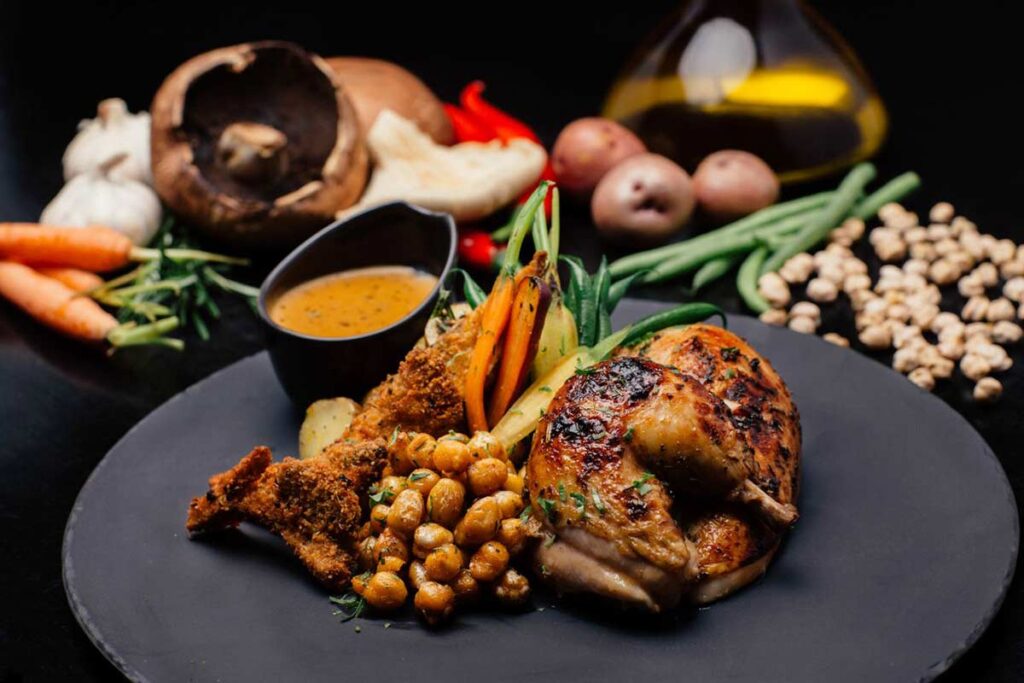
Photo by Mahmoud Salem on Pexels
Is Rotisserie Chicken Healthy?
Yes, it can be part of a healthy eating pattern. Rotisserie chicken gives you ready-to-eat protein, which can make dinner easier when time is short. University of Wyoming Extension nutrition educator Vicki Hayman, MS, describes it as “a great healthy option for people looking for a lean source of protein”.
The seasoning, added solution, cut of meat, and whether you eat the skin can change the nutrition picture. Convenience is not a nutritional flaw; the details on the label matter more.
What Do Protein and Chicken Skin Change?
Chicken provides protein for maintaining and repairing tissues. Breast meat without the skin is generally leaner; dark meat also provides protein and may be the part you enjoy most.
The crispy skin adds fat, including saturated fat. Removing it can lower the fat in your portion. Peeling off the skin does not necessarily remove sodium added through brining or seasoning.
If chicken alone leaves you hungry again, the missing piece may be the rest of the meal. Our guide to foods that keep you full longer explains how protein, fiber, and fats work together.
How Much Does Sodium Matter?
Check the Nutrition Facts label and serving size when available. Look for clues such as “brined” or “contains a solution” on the package. A plain-tasting chicken is not automatically low in sodium.
The American Heart Association notes that more than 70% of the sodium Americans eat comes from packaged, prepared, and restaurant foods. It recommends no more than 2,300 mg a day, with an optimal goal of 1,500 mg for most adults. Those are daily totals, so the chicken, sauce, bread, and sides all count.
If you have high blood pressure, kidney disease, or a prescribed sodium limit, follow your clinician’s or dietitian’s guidance. When nutrition information is unavailable, choose simple sides and go easy on salty sauces.
Can Eating Chicken Help Your Skin?
Chicken supplies protein your body uses throughout its tissues, including the skin. But one protein-rich dinner will not clear acne or create an instant glow. Skin changes have many causes.
Add bell peppers, broccoli, or tomatoes. The NIH Office of Dietary Supplements explains that vitamin C is required for collagen production and that fruits and vegetables are its best food sources. Build a varied plate instead of expecting chicken to act like a beauty treatment.
Three Easy Ways to Make It a Balanced Meal
- The ten-minute bowl: Shred chicken over brown rice or quinoa, add bagged greens and sliced peppers, then finish with olive oil and lemon.
- The warm dinner plate: Serve chicken with a baked potato and steamed frozen broccoli. Add yogurt with herbs if you want a quick sauce.
- The next-day wrap: Combine leftover chicken, cucumber, tomato, and greens in a whole-grain wrap; use avocado or a little yogurt for creaminess.
The chicken is the shortcut, not the entire meal. For a flexible framework, see how to build a balanced plate without counting calories. For more combinations, explore what to eat for steady energy.
Frequently Asked Questions
Is rotisserie chicken healthier without the skin?
Removing the skin generally lowers the fat and saturated fat in your portion. It is a useful option if that matters for your eating plan, but the sodium in seasoned or brined meat may still be significant. Check the product label when you can.
Can I eat rotisserie chicken every week?
For many people, it can be a regular convenience food. Vary your protein sources over the week and pay attention to sodium if you rely on prepared foods often or have a medical reason to limit it.
How long can I keep leftover rotisserie chicken?
Refrigerate it promptly in a shallow container and use it within three to four days. USDA food-safety guidance says to discard perishable food left at room temperature for more than two hours. If the chicken spent a long time in a warm car or on the counter, do not save it for another meal.
Final Thoughts
Rotisserie chicken can make a nourishing dinner more realistic. Choose the version that fits your needs, check sodium when possible, and add vegetables and a satisfying carbohydrate. A useful shortcut is one that helps you eat well on an ordinary Tuesday.
Do you have a favorite quick side or leftover idea?
Share it in the comments and help another reader plan an easier meal.