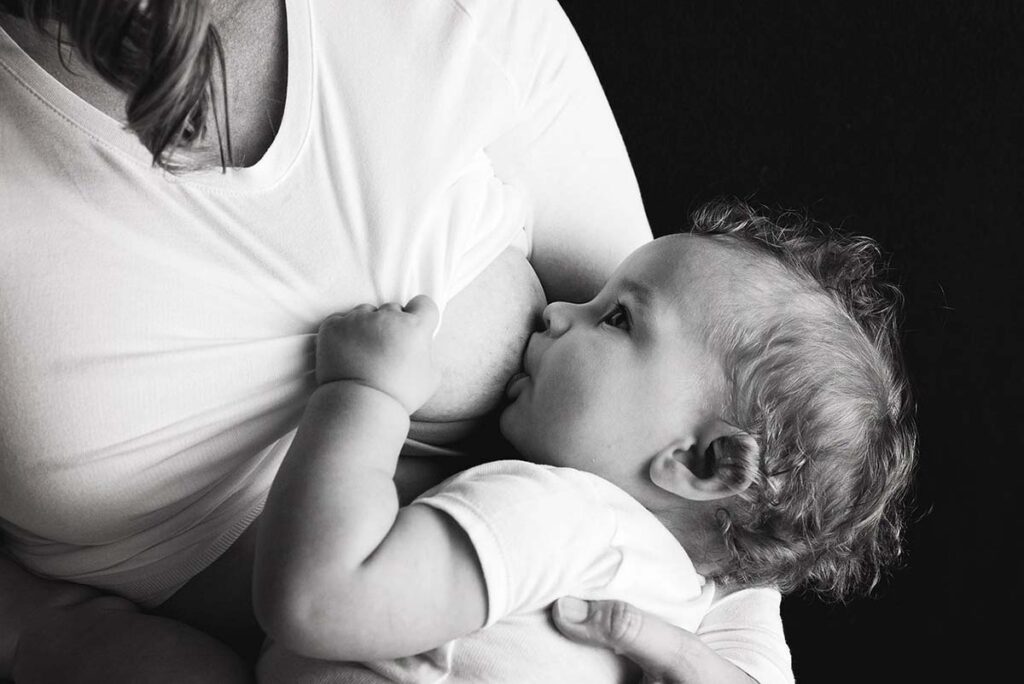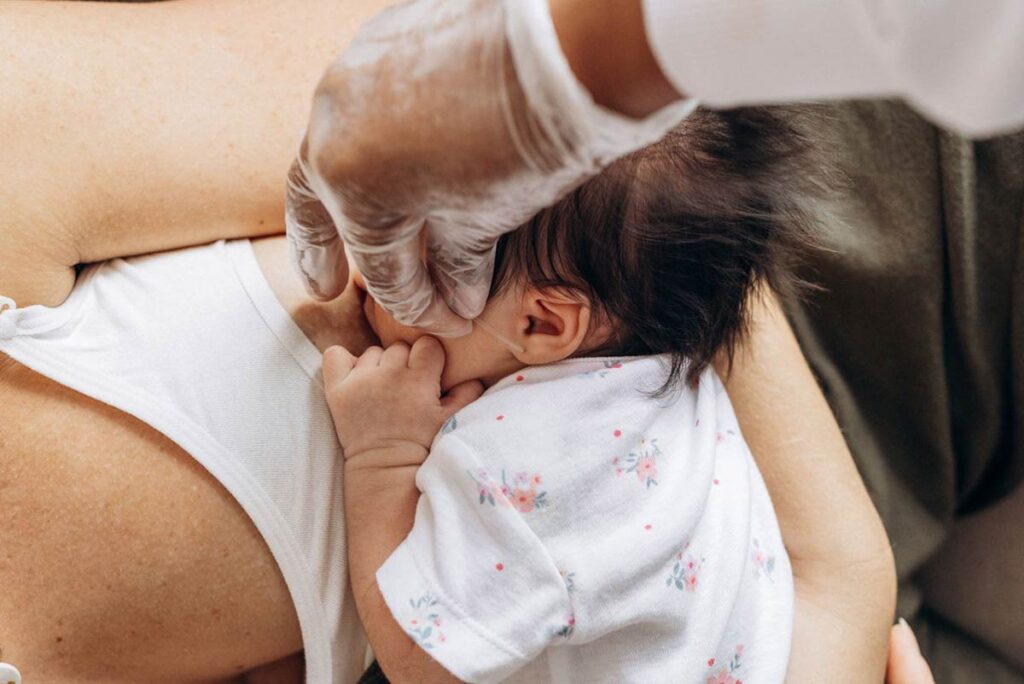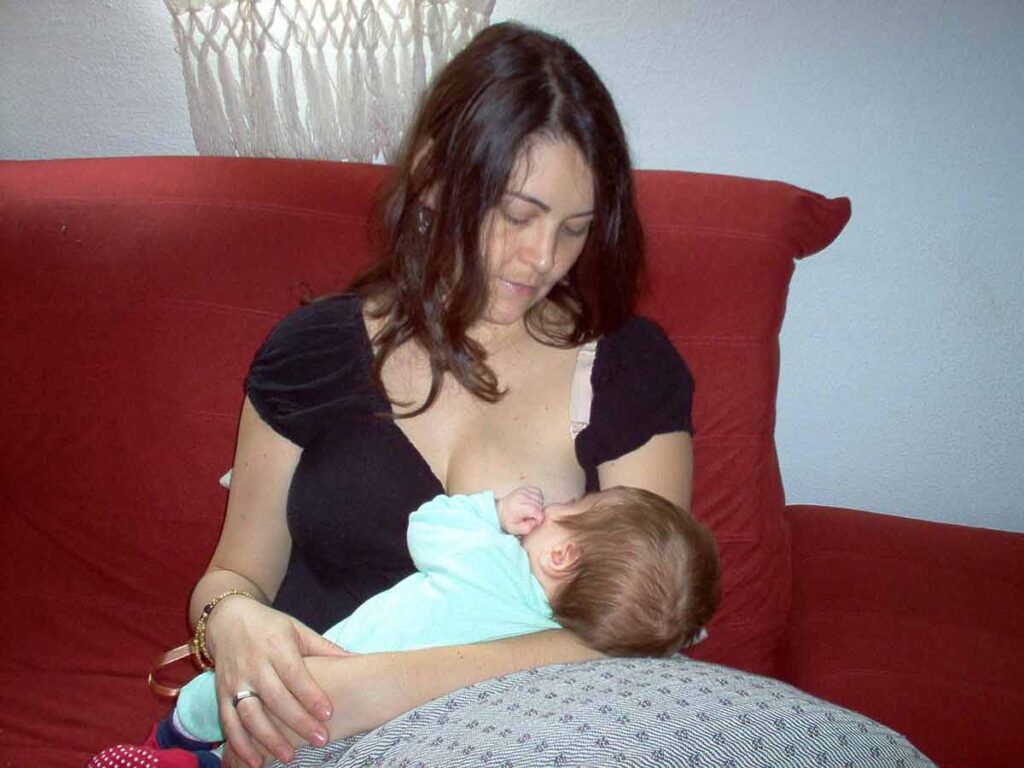
It is 2 a.m., your baby is stirring, and the pajama button you could open yesterday now seems impossible. Your water is across the room, your top keeps slipping down, and you are bracing your shoulders for another feed.
Breastfeeding at night can involve several small inconveniences before your baby even latches. Changing what you wear and keep nearby may make those moments easier. Start with whatever interrupts you most, while keeping your baby’s feeding needs and a safe place to sleep at the center of the plan.
Photo by lgrodela on Pixabay
In This Article
Choose Clothes That Open Easily
Try a loose button-front top, a nursing tank, or a stretchy neckline that moves aside comfortably. Check that the fabric stays clear without bunching against your breast. You should not have to hold your clothes open for an entire feed.
If you use a bra, our guide to nursing vs pumping bras explains their different openings.
Keep a Few Essentials Within Reach
Set out water, a burp cloth, clean breast pads if you use them, and a spare top. Change damp pads promptly. Keep supplies and lamp cords outside your baby’s sleep space and reach.
Use enough light to see your baby’s face and latch. If someone can help, agree beforehand who will handle diaper changes or resettling.
Keep supplies close and the sleep space clear. Move laundry or bags out of the route back to the bassinet before the first night feed.
Settle Your Body Before the Latch
The NHS positioning guidance recommends relaxing your shoulders and arms and bringing your baby toward your breast rather than leaning forward. Keep your baby’s head and body aligned, with the nose clear.
If you use a feeding pillow while awake and alert, keep it away from your baby’s face and out of the crib. It is not a sleep surface.
Plan for the Moments You Feel Sleepy
In her advice for tired parents, pediatrician Rachel Moon, MD, recommends assessing your tiredness before feeding and asking someone to stay with you if you might doze off.
The AAP safe sleep recommendations call for a separate crib or bassinet in your room for at least the first six months. After feeding, place your baby on their back on a firm, flat mattress with only a fitted sheet.
Avoid sofas and armchairs if you might fall asleep. If feeding in bed, clear pillows, blankets, and other items that could cover your baby’s face or cause overheating. This reduces some hazards but does not make bed-sharing safe. Return your baby to their own sleep space before you sleep, or immediately upon waking if you accidentally doze off.
For difficult transfers, read why a baby wakes when put down.
Try This Today
Before bed, rehearse opening and closing your feeding top with one hand while your baby rests safely in the bassinet. Adjust whichever layer keeps getting in the way.
When Comfort Changes Are Not Enough
Persistent pain needs more than a different top. The CDC newborn breastfeeding guide advises prompt feeding support for painful latching, cracked or bleeding nipples, or concerns about milk intake. Contact your baby’s clinician right away if feeding is ineffective; by day five, fewer than six wet diapers in 24 hours is a warning sign.
A hot, painful breast with fever or flu-like symptoms needs prompt medical advice. The NHS mastitis guidance advises assessment if symptoms do not improve within 12–24 hours of home care; seek help sooner if you feel worse.
Our guide to sore breasts after birth covers early fullness in more detail.
Frequently Asked Questions
Do I need to wear a nursing bra to bed?
According to the Australian Breastfeeding Association, wearing a bra to bed is a personal choice. If you prefer support or need to keep breast pads in place, choose a soft bra that feels comfortable and does not dig in.
Should I stretch out feeds to make nights easier?
The CDC feeding guidance notes that young babies commonly breastfeed 8–12 times in 24 hours and some newborns need waking. Follow your baby’s cues and any feeding plan from their clinician; simplifying your setup does not mean delaying needed feeds.
Final Thoughts
Start with one change that removes an awkward moment from tonight’s feed. A top that stays out of the way or a helping pair of hands can make a difference while your baby’s needs continue to set the pace.
Night feeds can reveal the smallest annoyances.
What made your setup more comfortable?
Share the change that helped you in the comments.