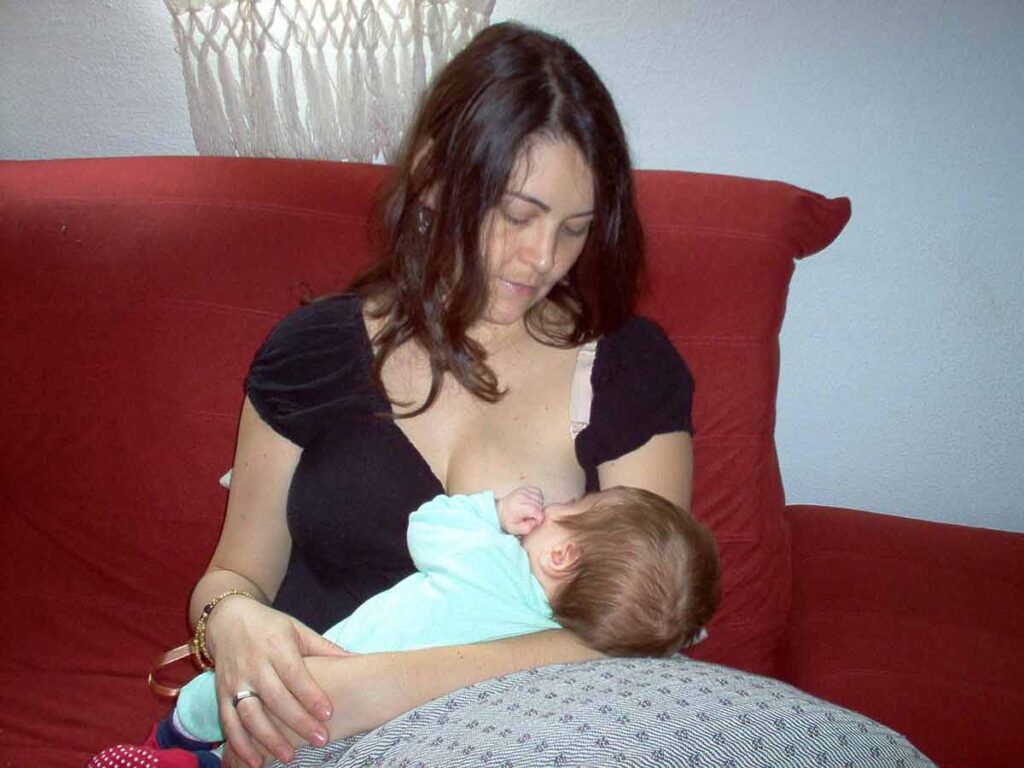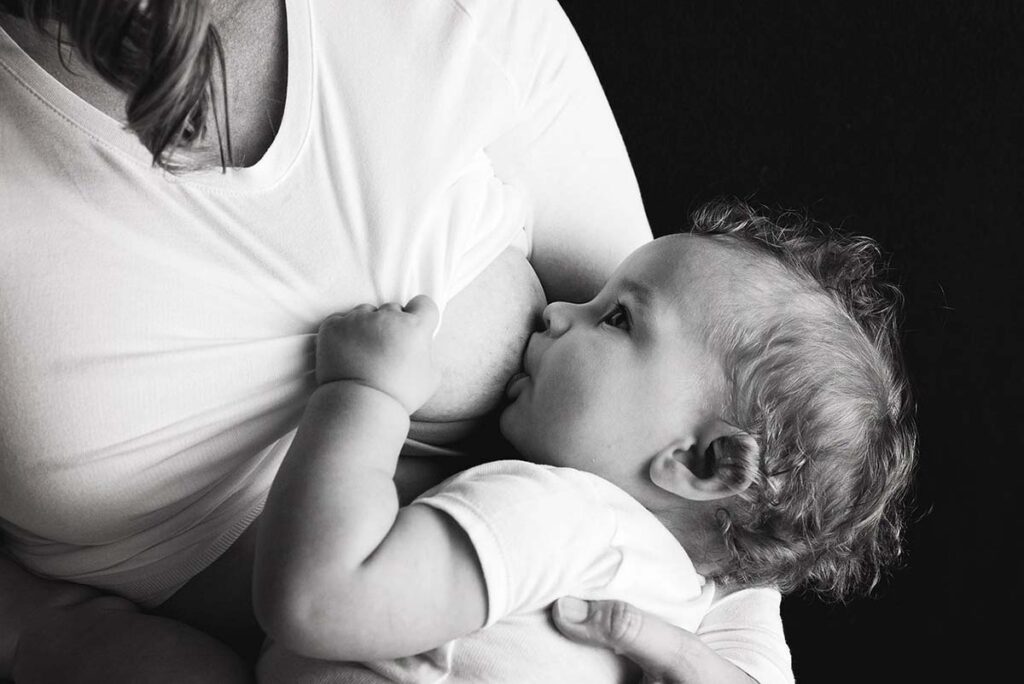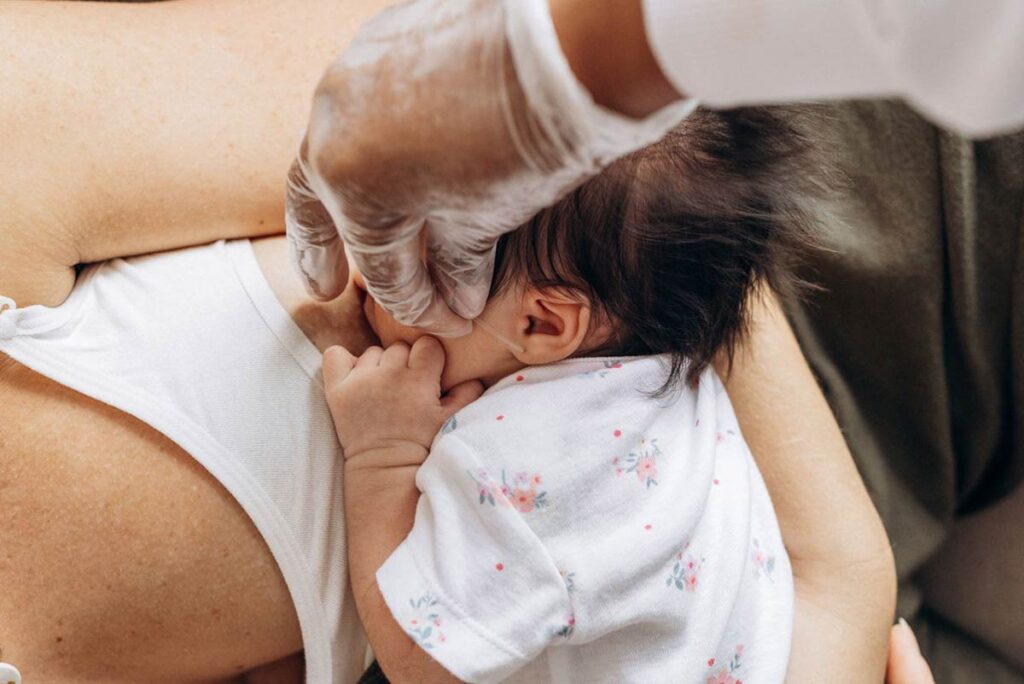
One morning, the bra that felt comfortable yesterday suddenly presses against your chest. Both breasts feel heavy and tender, and your baby keeps slipping off a breast that seems too firm to latch onto.
If you are dealing with sore breasts after birth, that sudden change can feel unsettling. Milk production is increasing, but swelling contributes too.
Here is how to recognize early engorgement, ease the pressure gently, and know when you or your baby need help.
Photo by Jonathan Borba on Pexels
In This Article
Why Your Breasts Feel Suddenly Fuller
As milk production increases, more blood and lymph fluid reach your breasts. Some of that tightness comes from swelling within the tissue. These changes often become noticeable around days three to five, although timing varies.
Breastfeeding medicine physician Kam Lam, MD, explains that mild engorgement “typically lasts a few days.” Some discomfort may last up to a week, but hard, tight swelling that makes feeding difficult needs support.
What May Ease the Pressure
If you are breastfeeding, try these gentle measures:
- Offer feeds when your baby shows early hunger cues.
- If firmness prevents a latch, hand-express a little milk to soften the area around the nipple. A lactation consultant can also show you reverse pressure softening to ease swelling around the nipple.
- Apply a cold compress between feeds; wrap an ice pack in cloth.
- Choose a supportive bra that does not dig in.
- Ask your clinician whether ibuprofen or acetaminophen is suitable for you.
Express only enough extra milk to ease discomfort; repeatedly removing more can increase production.
While you are awake and alert, skin-to-skin with your newborn offers a chance to notice early feeding cues.
If your newborn wants to be held all the time, another caregiver can take over some cuddles while you rest between feeds.
Try This Today
Place a clean, soft cloth beside your usual feeding spot today. Between feeds, wet it with cool water, wring it out, and gently rest it over the tender area if that feels comfortable.
Why Extra Pumping Can Backfire
The Academy of Breastfeeding Medicine advises feeding on demand and says, “do not aim to ‘empty’ breasts.” Its guidance includes a clinical example of a mother told to pump every two hours who developed increased milk production and a continued cycle of mastitis.
More pumping can mean more fullness. Avoid adding pumping sessions simply to make your breasts feel completely soft, deep massage and prolonged heat. If you pump instead of nursing, or your baby is not transferring milk well, ask your care team for a feeding and expressing plan.
When Sore Breasts After Birth Need Medical Advice
Call your clinician promptly if one breast develops a hot, painful area, especially with chills or flu-like aches. Redness can be harder to see on darker skin. Worsening symptoms, or symptoms that do not improve within 12–24 hours of self-care, need assessment for possible mastitis. NHS
A postpartum fever of 100.4°F (38°C) or higher needs medical care right away, according to the CDC. Do not assume it is simply your milk coming in.
Get feeding support the same day if pain or swelling prevents your baby from feeding effectively. Persistent nipple pain, cracks or bleeding also deserve a latch assessment.
Frequently Asked Questions
Can this happen if I am not breastfeeding?
Yes, milk can come in even if you choose formula. Cold packs and comfortable breast support may help; avoid routine pumping if your goal is to stop milk production. If pressure is severe, ask your maternity team for a plan.
Do full breasts mean my baby is getting enough milk?
Fullness alone cannot tell you how much milk your baby receives. Watch for swallowing and wet diapers; by day five, fewer than six wet diapers in 24 hours warrants contacting your baby’s clinician. Seek help right away if you are concerned about milk intake.
Final Thoughts
Early fullness often settles as feeding becomes established. If your breasts remain painfully tight or feeding is difficult, a latch assessment and an individualized plan can help you take the next step.
Did breast fullness catch you by surprise in the first week after birth?
What made feeding or resting more comfortable for you?
Share your experience in the comments with other new mothers.