

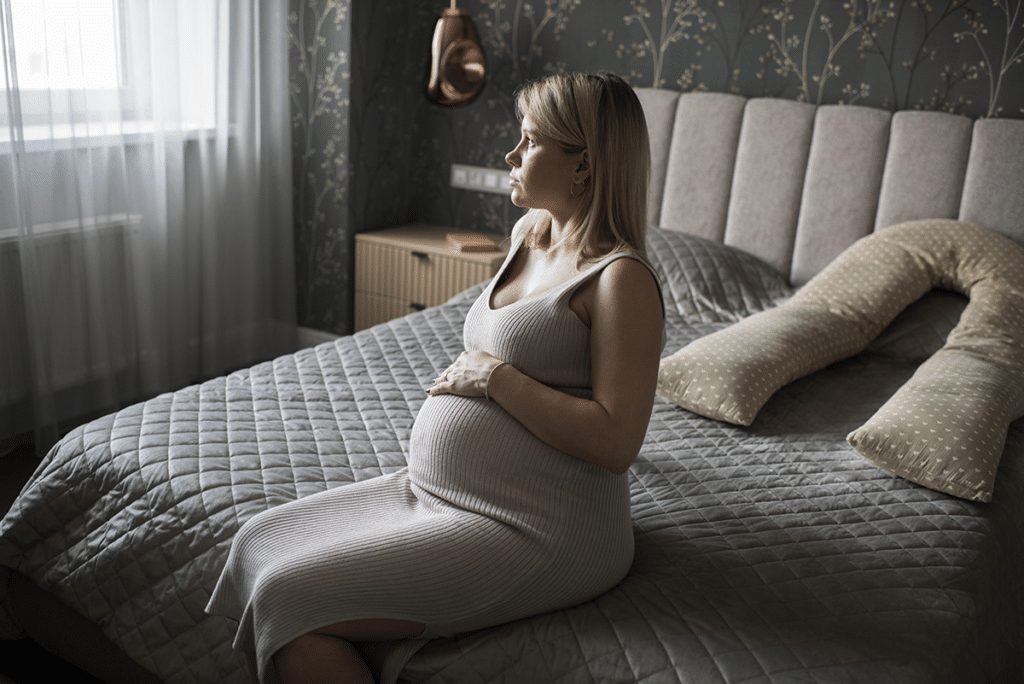
Dinner seemed fine. Then you lie down, finally ready to sleep, and a hot, sour feeling begins rising behind your breastbone.
Pregnancy heartburn at night can turn bedtime into another uncomfortable part of the day.
When it appears alongside other pregnancy sleep problems, getting enough rest can feel especially difficult.
It may feel like burning in your chest or throat, a bitter taste, burping, bloating, or food coming back up after you have eaten.
The symptom is common, especially as pregnancy progresses. But a few thoughtful changes to meal timing, portion size, and sleeping position may make evenings noticeably easier.
Image credit: Photo by Magnific
Why Does Pregnancy Heartburn Get Worse at Night?
Pregnancy heartburn may be caused by hormonal changes and the growing baby pressing against your stomach. Hormones can relax the muscle that normally helps keep stomach contents from moving back into the esophagus, while the expanding uterus adds physical pressure.
Night adds another factor: you are no longer upright. When you lie flat, gravity is less able to help keep stomach acid where it belongs.
Symptoms may become more noticeable later in pregnancy, when the uterus takes up more space and presses against surrounding organs. A full evening meal can add even more pressure.
What Does Nighttime Heartburn Feel Like?
Heartburn does not always feel exactly the same for every woman. The classic sign is a burning sensation behind the chest that may rise toward the throat.
You may also notice a sour taste, frequent burping, uncomfortable fullness, nausea, or regurgitation. Symptoms often appear after eating and can become stronger when you bend over or lie down.
What May Help You Sleep More Comfortably?
Move Dinner a Little Earlier
Try to leave about three hours between your evening meal and bedtime. This gives your stomach more time to process food before you lie down.
When an early dinner is not realistic, choose something smaller and lighter rather than a heavy meal close to bed.
Choose Smaller Evening Meals
A very full stomach is more likely to push acid upward. Smaller meals eaten more frequently may feel gentler than three large meals.
Eat slowly and stop when you feel comfortably satisfied. Pregnancy is not the moment to force yourself to finish an oversized portion simply because it is on the plate.
A balanced pregnancy diet can still include satisfying meals without relying on large, heavy portions late in the evening.
Notice Your Personal Triggers
Spicy, fried, fatty, acidic, or very rich foods trigger symptoms for many people, but not everyone reacts to the same foods.
Our guide to foods to avoid during pregnancy can also help you separate food-safety rules from foods that are simply personal heartburn triggers.
Instead of cutting out a long list immediately, notice what happens after particular meals. A simple food-and-symptom note for several evenings may reveal whether tomatoes, citrus, chocolate, caffeine, or another food consistently makes bedtime worse.
Stay Upright After Eating
Sit upright after dinner rather than stretching out on the sofa. A gentle walk may feel better than lying down immediately, provided movement is comfortable and approved for your pregnancy.
Avoid bending deeply at the waist soon after eating, as this can increase pressure on your stomach.
Adjust Your Sleeping Position
Elevating your upper body may make it harder for acid to travel upward. Supporting only your head with several soft pillows may bend your body awkwardly, so aim to raise your shoulders and upper torso as well.
Sleeping on your left side may also feel more comfortable for reflux. Use pillows to support your belly, back, and knees so the position does not create new pressure elsewhere.
The right pregnancy pillow may help support your belly, back, and knees while you experiment with a more comfortable side-sleeping position.
A Doctor’s Practical Explanation
In a Cleveland Clinic expert discussion, gastroenterologist Dr. Scott Gabbard explains that lying down removes some of gravity’s help in clearing food, bile, and acid from the esophagus.
His practical advice includes waiting after meals, sleeping on the left side, and elevating the upper body. This explains why a dinner that felt harmless while you were sitting may suddenly become uncomfortable once you get into bed.
What About Heartburn Medicine During Pregnancy?
If lifestyle changes are not enough, speak with your prenatal healthcare provider, midwife, or pharmacist. Some antacids and alginate products can be used during pregnancy, but not every product or ingredient is appropriate.
Tell the pharmacist that you are pregnant and mention any prenatal vitamins or iron supplements you take. Some antacids can interfere with the absorption of iron or folic acid when taken too close together.
Avoid experimenting with baking soda, herbal mixtures, or someone else’s medication. A treatment that helped a friend may not be the right choice for your pregnancy.
When Should You Call Your Healthcare Provider?
Ask for medical advice if heartburn keeps returning, wakes you repeatedly, or does not improve after reasonable lifestyle changes.
Contact your provider if you have trouble swallowing, unexplained weight loss, vomiting blood, black stools, persistent abdominal pain, or symptoms that feel different from ordinary reflux.
New or severe chest pain should never automatically be assumed to be heartburn. Seek urgent assessment if the pain is intense, unfamiliar, or accompanied by breathing difficulty, sweating, weakness, or dizziness.
Pregnancy comfort does not stop at bedtime. If the weight of your growing belly is also making daytime movement harder, see our guide to pregnancy belly bands for everyday support.
Final Thoughts
Pregnancy heartburn at night can be exhausting, especially when sleep is already difficult. Begin with the simplest adjustments: eat a little earlier, reduce the size of your evening meal, remain upright after eating, and support your upper body in bed.
You do not have to tolerate severe or persistent symptoms alone. Your prenatal healthcare provider can help you find a pregnancy-appropriate option when lifestyle changes are not enough.
A calmer evening routine may not remove every symptom, but it can make bedtime feel more comfortable and predictable.
Did heartburn become worse at night during your pregnancy?
Share the gentle evening habits that helped you feel more comfortable.
Your experience may help another mom-to-be enjoy a more restful night.