You have a few quiet minutes before work, but the bathroom visit drags on. You shift your feet, lean forward, and wonder whether a small change in position could make things easier.
A toilet stool gives your feet a raised resting place while you stay seated. That may feel more comfortable, but choosing one means thinking about your toilet’s shape, the available floor space, and how high your knees can comfortably lift.
This guide compares five of the best toilet stools for different bathroom setups, with practical trade-offs and a careful look at the evidence behind using a footstool.
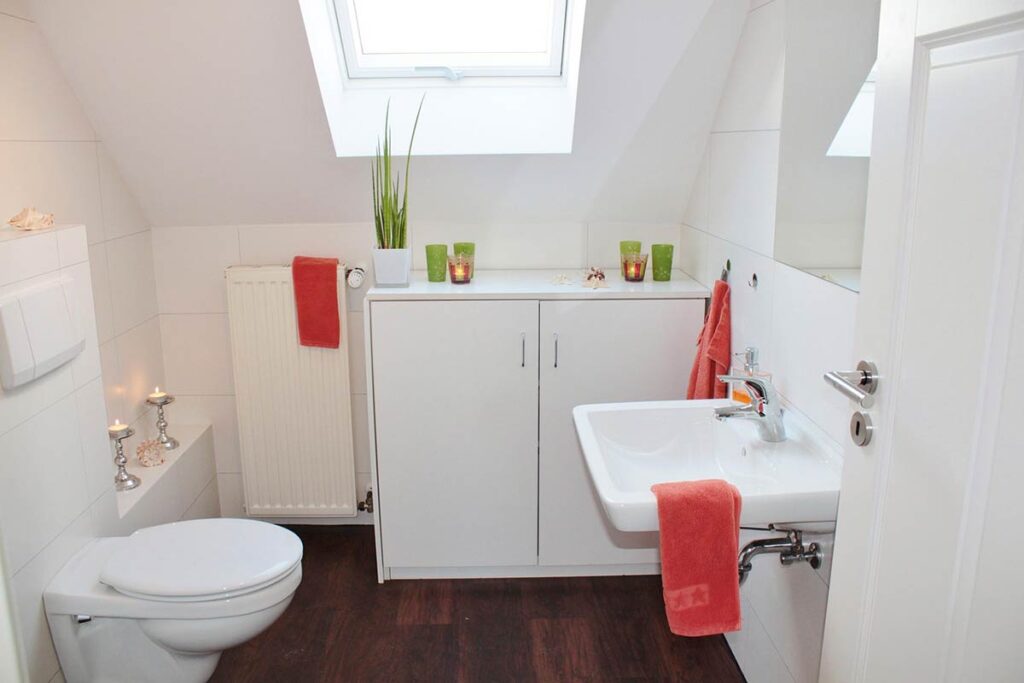
Photo by cocoparisienne on Pixabay
In This Article
Affiliate Disclosure
As an Amazon Associate, I earn from qualifying purchases. This article contains affiliate links, which may earn BloomHerLife a commission at no extra cost to you. Thank you for supporting BloomHerLife.
Can a Toilet Stool Make Bowel Movements Easier?
In a Cleveland Clinic podcast, gastroenterologist Monica Multani, DO, explains why she sometimes suggests trying a footstool.
What it does is it brings up your knees and puts you in a better anatomical position to have bowel movements.
In a 2019 study of 52 volunteers, participants reported less straining, a greater sense of emptying, and shorter bathroom visits when using a footstool. The participants averaged 29 years of age and recorded two weeks of bowel movements without the device followed by two weeks with it.
In a 2023 randomized trial, 41 people with constipation tried a balloon expulsion test in three positions. They sat with their feet on the floor, on a 7-inch stool, and on a 9-inch stool. The footstools changed their seated posture, and the time it took to pass the balloon was similar across the three positions. The test simulates part of a bowel movement.
How We Chose These Toilet Stools
This guide draws on the selected Amazon listings and manufacturer specifications. We compared height, clearance around the toilet base, room for your feet, materials, assembly, and storage. Each pick highlights a different design for a particular bathroom setup.
The 5 Best Toilet Stools at a Glance
| Toilet stool | Best for | Listed Design or Size | Check Before Buying |
| Squatty Potty Original 2.0 | Classic design | 7-inch fixed plastic stool | Inner opening around the toilet base |
| Squatty Potty Bamboo Flip | Two bamboo positions | Sold as 7- and 9-inch positions | Overall height in each position |
| Squatty Potty Oslo | Folding storage | 7-inch folding bamboo model | Folded width and thickness |
| MR.SIGA | Stackable design | Nested plastic sections, 8.15 inches high when assembled | Foot room and clearance |
| StrongTek Enhanced | Fixed wood design | Lauan plywood, roughly 7 inches high | Depth and standing room |
Check the listing for the current price, selected variant, and dimensions before ordering.
What to Check Before Buying
Start with the space you use to sit and stand.
- Compare the stool’s inner opening with the toilet base where the stool will sit. Check its full depth against the floor space in front of the toilet.
- Choose a height that lets your feet rest comfortably. Consider your toilet seat height and how much bend feels comfortable in your hips and knees.
- Look at the usable foot platform, especially if the surface slopes or has raised edges.
- Decide where the stool will go between uses. For a folding or nested model, check the stored dimensions and how the parts fit together.
Try This Today
Measure the width of your toilet base where a footstool would sit and the clear floor depth in front of it. Compare those numbers with the stool’s inner opening and full depth before you order.
Our Five Toilet Stool Picks
1. Squatty Potty Original 2.0
This white 7-inch model is a fixed plastic footrest with an opening that wraps around the toilet base. It suits a bathroom where you can leave the stool within easy reach.
Measure the inside opening against your toilet base. If you want to tuck it under the bowl between uses, check how far the front edge will project into the room.
View the Squatty Potty Original 2.0 on Amazon
2. Squatty Potty Bamboo Flip
Turn the stool over to switch between two positions. Squatty Potty describes them as 7 and 9 inches and lists overall heights of 7¾ and 9½ inches. Assembly is required.
The two positions are useful if people who share a bathroom prefer different heights. Check the usable platform in both positions, especially if you need room for your whole foot.
View the Squatty Potty Bamboo Flip on Amazon
3. Squatty Potty Oslo
The bamboo Oslo comes preassembled. Squatty Potty lists its folded size as about 17 inches wide and 1.8 inches thick, useful when the bathroom floor needs to stay clear between visits.
Measure the intended storage space. When you set it up, follow the hinge instructions and check that both legs are fully open and steady before resting your feet on it.
View the Squatty Potty Oslo on Amazon
4. MR.SIGA Toilet Stool
This model has two nested polypropylene sections with textured surfaces and TPR-covered feet. The manufacturer lists the assembled size as 16.9 inches wide, 10.8 inches deep, and 8.15 inches high.
Check the width of the opening around your toilet and the amount of room on the upper platform. Follow the manufacturer’s instructions for fitting the sections together before use.
View the MR.SIGA Toilet Stool on Amazon
5. StrongTek Enhanced
StrongTek describes the construction as lauan hardwood plywood. The fixed design has a textured rubber top and rubber pads on the feet. It suits a bathroom where a stool can stay nearby between visits.
Check the selected Natural version’s depth and assembly details on the listing. Make sure you can set both feet back on the floor and stand up comfortably with the stool in place.
View the StrongTek Enhanced Toilet Stool on Amazon
How to Try a Toilet Stool Comfortably
The NHS constipation guidance suggests resting your feet on a low stool and, if possible, raising your knees above your hips. Treat that as a comfortable seated position to try, rather than a height you must force yourself to reach.
- Set the stool on a dry, level floor and check that it sits securely.
- Sit on the toilet, then place your feet on the resting surfaces.
- Notice whether your feet have enough room and your hips and knees feel comfortable.
- Stop using that position if it causes pain, numbness, or a sense of instability.
Put both feet back on the floor before standing. Follow the manufacturer’s instructions for cleaning, hinges, and assembly.
Look Beyond the Footstool When Constipation Keeps Returning
In a Mayo Clinic reader Q&A, a 53-year-old woman described constipation most weeks despite eating bran flakes daily. Gastroenterologist Yan Bi, MD, discussed her overall fiber intake and recommended a medical visit if dietary changes failed to help. Our guide to constipation in women covers other factors worth discussing.
If difficult bowel movements seem to follow your cycle, read about bowel changes during your period and note when the pattern starts and eases.
If symptoms shift as you get older, note changes in your routine or medications. Our article on how digestion changes with age offers more context.
When to Seek Medical Advice
Make an appointment if constipation persists despite self-care or keeps returning. Bring a short note on when it started, how often you strain, what the stool is like, and any recent medication changes.
Seek medical care right away if constipation comes with rectal bleeding, blood in your stool, constant abdominal pain, vomiting, fever, an inability to pass gas, or unexplained weight loss.
Frequently Asked Questions
Can I use an ordinary footstool instead?
A purpose-built shape is mainly a question of fit, storage, and foot placement. An ordinary low footrest may also provide a raised resting place, provided it is stable, gives your feet enough room, and allows comfortable access to the toilet.
Can I use a toilet stool with a raised toilet seat?
A raised seat changes how far your feet are from the floor, so the same footrest can feel different. If the seat is part of a mobility or recovery plan, ask the clinician who arranged it how to add foot support while preserving comfortable sitting and standing.
Do I need to keep using it if it makes no difference?
There is no need to persist with a footrest that feels awkward or provides no useful benefit. If constipation continues, review the symptoms and possible causes instead of assuming a taller or more expensive stool will solve it.
Final Thoughts
Check the opening around your toilet, the space for both feet, and whether the stool leaves you room to stand. If you share a small bathroom, decide where it will go between visits before you choose a design.
Have you tried a toilet stool that felt comfortable?
Which detail mattered most in your bathroom?
Share your experience in the comments.