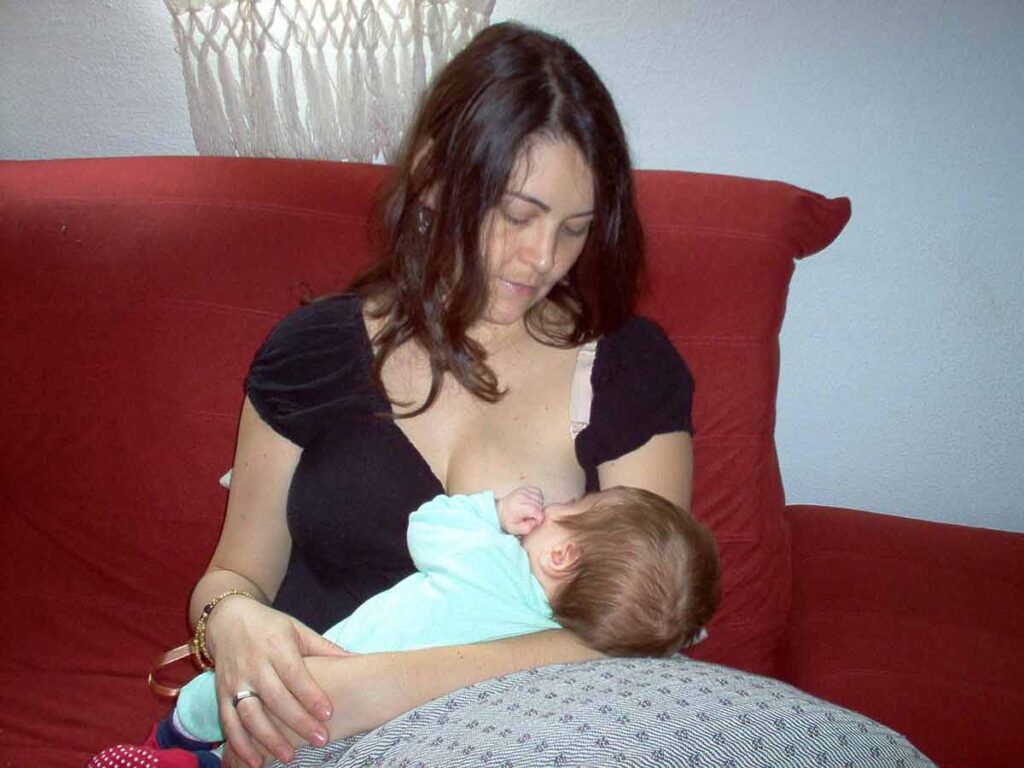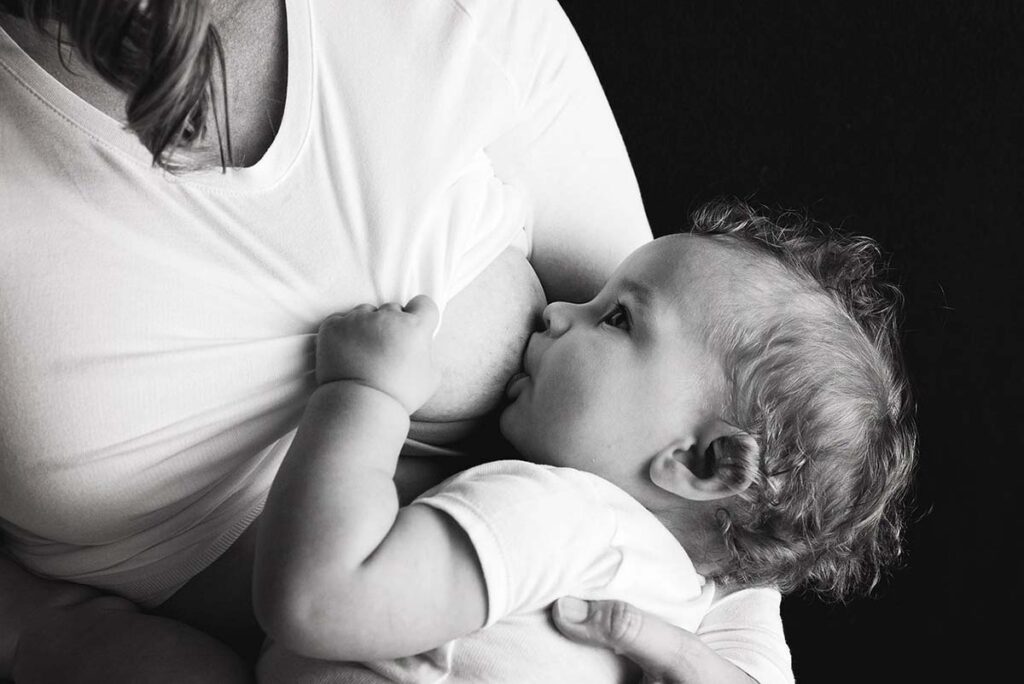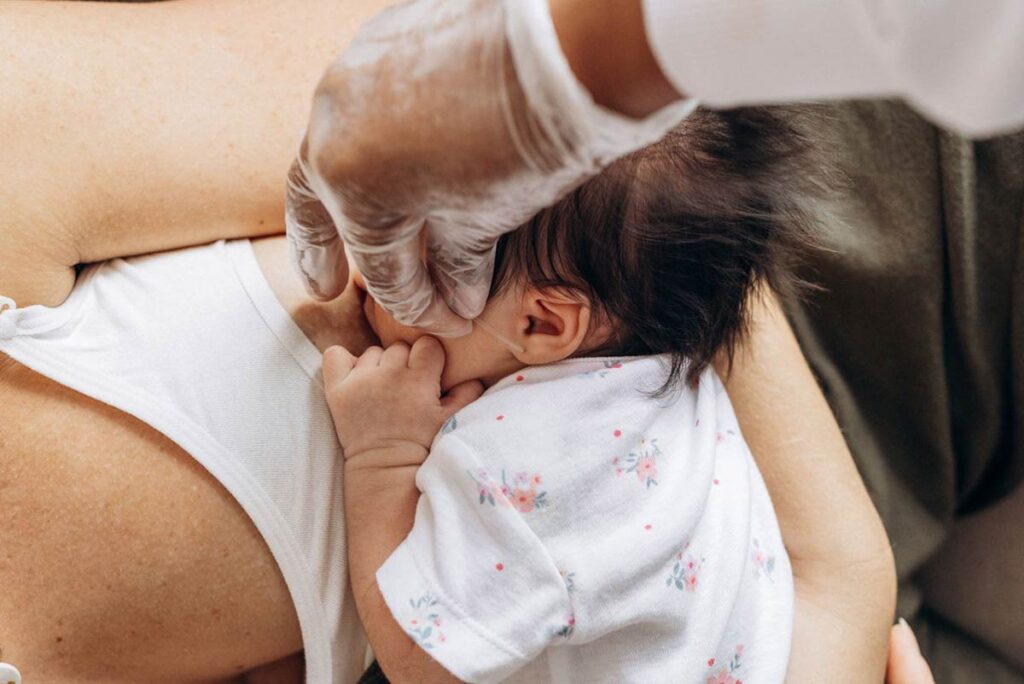
The nursing bra you clipped on after a feed felt fine. A few hours later, the top of one cup leaves a line and the band feels tight when you sit down. Before you order another size, check which part of the bra is pressing and when it starts.
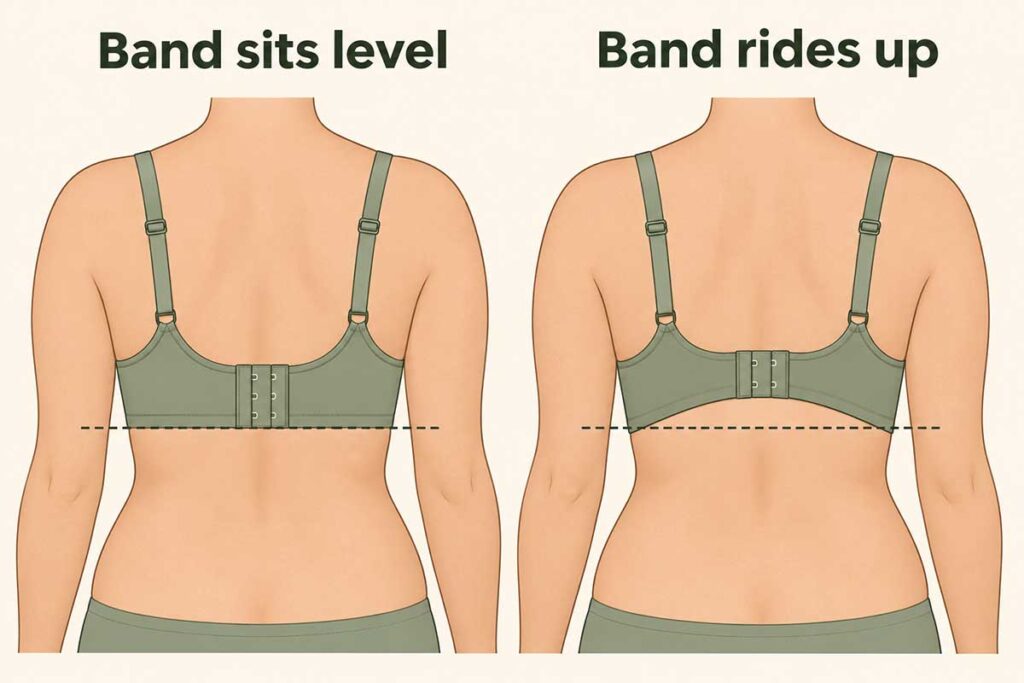
A good nursing bra fit gives you room in the cups when your breasts are fuller and still feels supportive after a feed. The band stays level around your ribs, and the straps rest comfortably on your shoulders.
Check both times during your usual feeding routine. The difference can tell you whether to change the hook, the cup, or the style.
Photo by Anna Tarazevich on Pexels
In This Article
How to Check Nursing Bra Fit
Start with the bra fit checklist from the UK’s National Childbirth Trust. Check these three areas before a feed, when your breasts feel fuller, and again afterward.
- Band. It should sit level under your breasts and across your back. Raise your arms, then sit down. If the back rides up, try a tighter hook. If the band digs into your ribs, try a looser one.
- Cups. The edges should lie smoothly, with room for all the breast tissue at the top and sides. If the band feels fine but a cup pinches near your armpit or leaves a sore line, try a roomier cup or a different shape in the same band size.
- Straps. They should stay put without digging in. If you have to shorten them until they pull on your shoulders, check whether the band is sliding up your back.
Open a cup while seated. The fabric should move out of the way and feel comfortable against your breast. If you switch between feeding and pumping, our guide to nursing and pumping bras explains how the openings differ.
With a smaller band and a G cup or larger, look for a nursing bra available in your band and cup combination. If the band fits and the cups press into your breasts before a feed, try a deeper, full-coverage cup in the same band size. For plus-size styles, look for several hook settings and sit down to see whether the band rolls or digs in. If the bra uses sizes like XL or 2X, compare both your underbust and full bust with the chart for that style.
Nursing Bra Size Calculator
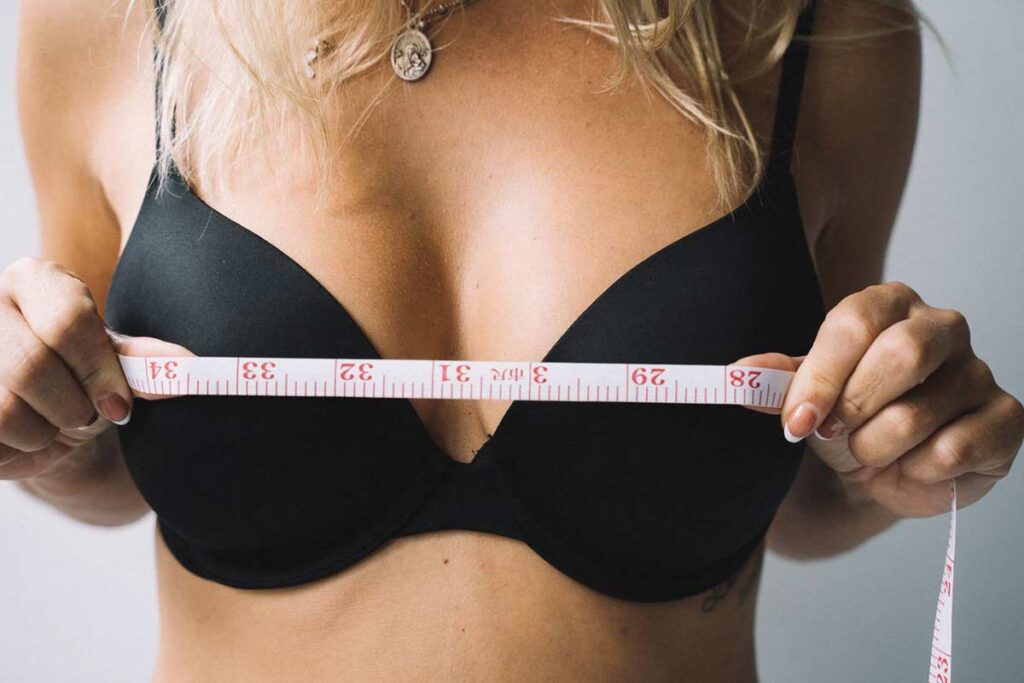
Keep a soft tape level as you measure snugly just under your breasts and again around the fullest part of your bust. If you’re nursing, measure before a usual feed, when your breasts feel fuller. Wear an unpadded bra that doesn’t compress your breasts.
Use the size chart for the bra you plan to buy. This US estimate follows the Kindred Bravely fitting guide.
What to Adjust When Your Size Changes
During pregnancy, buy for the way your bra fits today and look for a band with extra hook settings. After birth, a soft cup with some stretch can be more comfortable when your breasts feel full before a feed and softer afterward. If you’re dealing with first-week breast soreness, even familiar seams may feel irritating.
A cup can feel too small while the band still fits. If the cups squeeze before a feed and gape afterward, try a softer, stretchier cup. A little extra room after a feed is fine if the bra still feels supportive. If the pressure is around your ribs, try a different hook and recheck the cups.
Pediatrician and lactation consultant Dr. Cindy Rubin recommends a soft, flexible bra or camisole in the early weeks. She suggests trying a more fitted bra around six to eight weeks postpartum, once the early fullness has eased. If your fit still varies a lot by the end of a day, keep the flexibility you need now.
Try This Today
If you wear breast pads, put your usual ones in and sit in your feeding chair. Check whether a cup edge now presses where it felt comfortable without the pad.
When to Get Help for Breast Pain
Pressure that eases when you loosen or take off the bra is a reason to try a different fit. If breast pain persists after changing bras, contact your healthcare provider. If feeding hurts when your baby latches, a lactation consultant can help you check the latch.
During breastfeeding, pressure from a tight bra can contribute to swelling that narrows a milk duct. A firm, tender lump in one area of the breast can be a sign of what’s often called a clogged milk duct.
Call your healthcare provider promptly if you develop a hot, swollen, painful area on one breast, especially with fever or chills. MedlinePlus lists these among the signs of a possible breast infection.
Frequently Asked Questions
What If One Breast Is Larger?
Fit the cup to the larger breast so it has enough room. If the cup gapes on the smaller side, adjust that strap on its own or try a soft insert.
How Do I Measure for a Nursing Bra Online?
Use a soft tape to measure around your ribs just below your breasts and again around the fullest part of your bust. Use the chart for that brand and style. If you’re between sizes, check whether you can exchange it after trying it on at home.
Can I Wear an Underwire Nursing Bra?
The Australian Breastfeeding Association advises avoiding rigid underwires during pregnancy and breastfeeding because they can press on fuller areas. A wireless style is a practical choice if you feel pressure under the cup or near your armpit.
Final Thoughts
Before buying a second bra in the same size, wear the first through a regular feeding day. If you keep loosening the same hook or pulling the same cup edge away from your skin, you’ll know what to change when you try on the next one.
Did your bra fit differently before and after feeds?
Which adjustment made the biggest difference for you?
Share what worked in the comments.