

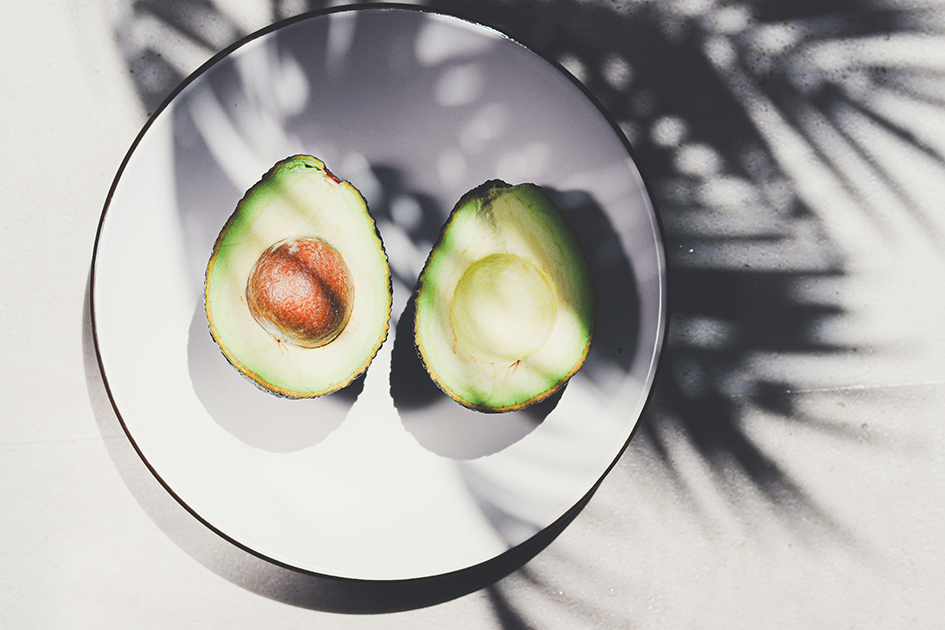
Avocado has earned a reputation as a “superfood,” but it does not need exaggerated health claims to be a nutritious choice.
It provides mostly unsaturated fat, fiber, potassium, folate, and several vitamins and minerals. What matters most, though, is how avocado fits into your overall eating pattern, not whether you eat it every day.
Harvard nutrition expert Frank Hu, MD, PhD, describes it this way:
“Avocados are no regular fruits. They’re nutrient dense with very little carbohydrates and high amounts of healthy fats and fiber.”
That combination is what makes avocado useful — not promises about balancing hormones or transforming your skin.
Photo by Olga Petnyunene on Unsplash
1. Avocado Is Rich in Unsaturated Fat
Most of the fat in avocado is monounsaturated fat.
That matters because replacing foods higher in saturated fat with sources of unsaturated fat is generally considered a heart-healthier choice.
Try avocado in place of butter or a creamy spread on toast, or add it to a meal that would otherwise be very low in fat.
It is not necessary to add avocado on top of an already high-calorie meal simply because it is considered healthy.
2. It Provides a Useful Amount of Fiber
A medium avocado contains about 10 grams of fiber, according to Harvard’s Nutrition Source.
Fiber supports regular digestion and can also help meals feel more satisfying.
A whole medium avocado also contains about 240 calories, so there is no universal “correct” serving. Half an avocado may be enough for one meal, while another person may comfortably eat more.
The point is not to fear the calories. It is simply to remember that nutrient-dense foods still contribute energy.
3. Avocado Can Fit Into a Heart-Healthy Diet
One of the more interesting studies followed more than 110,000 adults for about 30 years.
People who ate at least two servings of avocado per week had a 16% lower risk of cardiovascular disease and a 21% lower risk of coronary heart disease compared with people who rarely or never ate avocado.
But this was an observational study, which means it shows an association — it does not prove that avocado itself prevented heart disease.
The strongest message may be about substitution: replacing foods such as butter, cheese, or processed meats with avocado was also associated with lower cardiovascular risk.
4. Folate Is Especially Relevant During the Reproductive Years
Avocado naturally contains folate, a B vitamin involved in normal cell division.
That makes it one useful food source for women, particularly during the reproductive years.
But avocado should never be presented as a replacement for prenatal folic acid. ACOG recommends that pregnant women get 600 micrograms of folic acid daily and advises a prenatal vitamin containing at least 400 micrograms because diet alone may not reliably provide enough.
So avocado can contribute to a nutritious pregnancy diet, but it is only one part of the picture.
5. It Also Provides Potassium and Other Micronutrients
Avocado contains potassium, magnesium, vitamin K, vitamin E, several B vitamins, and carotenoids.
That is useful nutritionally, but it does not mean avocado uniquely boosts energy, prevents fatigue, or improves mood.
Those outcomes depend on your entire diet, sleep, activity, health conditions, and many other factors.
A single ingredient cannot carry that responsibility.
Does Avocado Balance Hormones?
This is where I would clearly correct the old article.
There is no good reason to tell readers that eating avocado will balance female hormones.
Yes, dietary fat is an essential nutrient and the body uses lipids and cholesterol in many biological processes. But that is very different from claiming that avocado corrects estrogen, progesterone, cortisol, thyroid hormones, or insulin.
If you are interested in the broader nutrition picture, our Foods That Support Hormone Health guide explains why a complete eating pattern matters more than individual “hormone foods.”
Easy Ways to Use Avocado
You do not need complicated recipes.
Try it:
- with eggs and whole-grain toast
- in a bean or grain bowl
- sliced into a salad
- mashed onto a sandwich
- alongside chicken, fish, or lentils
- blended into a dip with lime and herbs
Pairing avocado with protein, vegetables, and fiber-rich carbohydrates creates a more complete meal than simply eating avocado because it is trendy.
For more everyday meal ideas, see What to Eat for Energy.
Is Avocado Necessary for a Healthy Diet?
Not at all.
If you dislike avocado, cannot afford it regularly, or simply prefer other foods, you can get unsaturated fats from olive oil, nuts, seeds, and other foods.
No single food is required for good health.
That is an important message in nutrition: healthy eating should give you options, not another rule to follow.
Final Thoughts
Avocado deserves its healthy reputation for straightforward reasons.
It provides unsaturated fat, fiber, folate, potassium, and other nutrients, and it can be a useful replacement for foods higher in saturated fat.
What it does not do is magically balance hormones, prevent energy crashes, improve mood, or repair skin on its own.
Enjoy avocado because it is nutritious, satisfying, and versatile – not because you expect one fruit to change your health.
Do you eat avocado regularly, or is it more of an occasional food for you?
Maybe you love it on toast, add it to salads, or prefer getting healthy fats from completely different foods.
Share your favorite way to eat it in the comments below — simple ideas are often the most useful.