

You open the fridge looking for something quick, spot a tub of cottage cheese, and hesitate.
It is high in protein, easy to eat, and suddenly seems to be everywhere online. But then you check the label and notice the sodium. Is cottage cheese actually a healthy choice, or just another food enjoying a wellness moment?
For most people, cottage cheese can be a practical, nutrient-dense food. The useful question is not whether it is “good” or “bad,” but how it fits into the rest of your meal.
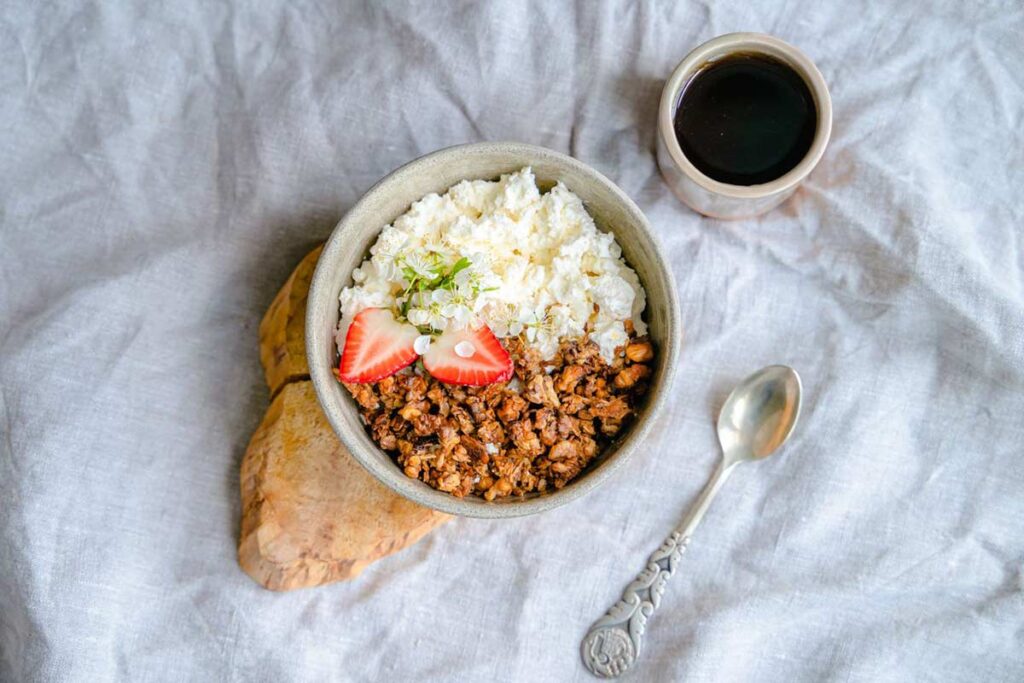
Photo by Antoni Shkraba on Pexels
What Does Cottage Cheese Actually Give You?
Cottage cheese is especially useful when you want protein without much preparation.
According to the Academy of Nutrition and Dietetics, a half-cup serving of 2% cottage cheese provides about 11 grams of protein, along with calcium, phosphorus and vitamin B12. The same serving also contains about 18% of the Daily Value for sodium, which is worth noticing if you eat it often.
That combination explains why cottage cheese can feel surprisingly satisfying for such a simple food.
But there is an important catch.
High-protein does not automatically mean low-sodium. A food can be nutritious and still contain enough sodium that the label matters.
Should You Worry About the Sodium?
Not necessarily.
If the rest of your diet is mostly made up of minimally processed foods, one serving of regular cottage cheese may fit easily. But sodium varies considerably by brand, so comparing two tubs side by side can make a real difference.
If you have been advised to limit sodium because of high blood pressure, kidney disease or another medical condition, a reduced-sodium cottage cheese may be the more practical choice.
You do not need to fear the regular version. You just need to know what you are buying.
Does Cottage Cheese Keep You Full?
Protein helps, but the whole meal still matters.
The same principle applies to foods that keep you full longer, which usually work best as part of a balanced meal rather than in isolation.
A half-cup of cottage cheese eaten alone may work as a quick snack. For breakfast or lunch, pairing it with fruit, vegetables, whole-grain toast, nuts or seeds usually makes the meal more complete.
Picture a rushed morning: cottage cheese straight from the container might hold you for a while, but cottage cheese with berries, walnuts and whole-grain toast gives you protein, fiber, carbohydrate and fat in the same meal.
If you often reach for dairy at breakfast, our guide to Greek yogurt vs. regular yogurt for protein and fullness can help you compare another easy option.
That is often more satisfying than simply adding a larger scoop of cottage cheese.
What If You Cannot Stand the Texture?
You are not alone.
Cleveland Clinic dietitian Kristin Kirkpatrick says cottage cheese has become popular with many of her patients because they see it as a simple, high-protein food. She also notes that the curds are exactly what put some people off, and suggests blending cottage cheese until it becomes smooth and creamy.
That small change opens up more options.
Blend it into pasta sauce, spread it on toast, stir it into scrambled eggs, or use it as a creamy base for dips. You do not have to eat cottage cheese straight from the tub to get the benefits.
Easy Ways to Eat Cottage Cheese
For something sweet, try cottage cheese with berries, sliced pear or banana, cinnamon and a few walnuts.
For a savory version, add cucumber, cherry tomatoes, black pepper and herbs, or spread blended cottage cheese onto whole-grain toast and top with avocado.
It can also replace part of the ricotta in lasagna, add protein to pancakes, or make a creamy pasta sauce without much extra work.
Simple works.
The best combination is the one you will actually make again.
For more quick combinations like these, see our healthy snacks for women that support energy and cravings.
What About Lactose and Gut Symptoms?
Cottage cheese is a fresh cheese, so it generally contains more lactose than many aged cheeses. Cleveland Clinic notes that people with lactose intolerance may do better with a lactose-free version, and that not every cottage cheese contains live probiotic cultures, so the label matters there too.
If cottage cheese repeatedly leaves you bloated, crampy or with diarrhea, especially when the same thing happens with other dairy foods, it is worth looking at lactose rather than assuming the food is simply “too rich.”
Persistent symptoms deserve a conversation with a healthcare professional, particularly if they are becoming stronger or limiting what you can comfortably eat.
And if you want an easier way to see how protein, vegetables, grains and fats fit together, start with How to Build a Balanced Plate Without Counting Calories.
Frequently Asked Questions
Is cottage cheese healthier than Greek yogurt?
Not necessarily. Both can be good sources of protein, but cottage cheese is often higher in sodium, while some Greek yogurts provide live cultures and may contain less sodium.
The better choice depends on the specific product, your preferences, and what fits the rest of your meal.
Is full-fat or low-fat cottage cheese better?
Neither is automatically the healthier choice. Low-fat cottage cheese may contain fewer calories and less saturated fat, while full-fat versions can taste richer and may feel more satisfying for some people.
Check the nutrition label, especially for sodium, and choose the version that fits your overall eating pattern.
Can you eat cottage cheese every day?
For many people, cottage cheese can fit into a regular diet, especially when it is paired with fruit, vegetables, whole grains, nuts, or seeds.
If you eat it daily, it is worth paying attention to sodium, portion size, and variety rather than relying on cottage cheese as your main protein source at every meal.
Final Thoughts
Cottage cheese deserves its current popularity, but not because it is a miracle food.
It is high in protein, quick, versatile and easy to combine with other foods, which makes it genuinely useful on busy days. The main thing to watch is sodium, especially if you eat it regularly or already need to limit salt.
And if you dislike the texture? Blend it.
Sometimes a food becomes more useful not because its nutrition changes, but because you finally find a way you enjoy eating it.
Have you found a combination that keeps you satisfied longer?
Share your favorite way to eat cottage cheese in the comments below.