

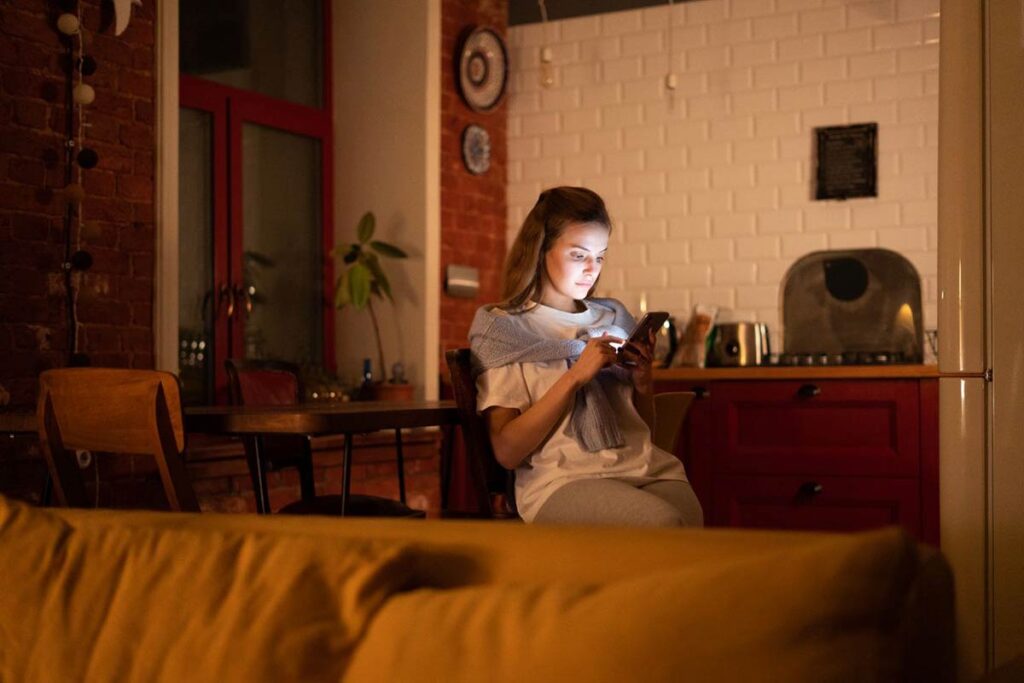
You close your laptop after a long day, sink into the sofa and reach for your phone. Twenty minutes of scrolling sounds harmless. You are finally doing nothing.
Except your mind does not feel any quieter afterward.
You have seen dozens of faces, read half a conversation, watched several videos and absorbed more headlines than you intended. A break from work is not always a break for your attention.
That difference can help explain why scrolling sometimes leaves you entertained, but not particularly rested.
Photo by cottonbro studio on Pexels
Why Scrolling Can Feel Like a Break Without Fully Restoring You
Your phone can do something useful after a demanding task: it can pull your mind somewhere else.
Research suggests, however, that this kind of break has limits. In a 2024 experiment involving 308 employees, researchers found that brief use of algorithm-driven social media videos helped participants detach from work and restore some depleted resources, but did not produce full recovery. A nature-based break performed better for restoring vigor.
So scrolling is not automatically “bad.”
The more useful distinction is this: distraction can feel like relief without becoming full recovery.
If your brain is still carrying work into the evening, learning how to mentally switch off after work can help create a clearer boundary before you reach for your phone.
Your Brain May Need Less Input, Not Better Input
Imagine a familiar evening.
You have spent eight hours switching between email, conversations, tasks and decisions. Then you open Instagram, TikTok or Facebook because you want to switch off.
The content is different. The input continues.
Cleveland Clinic psychologist Scott Bea, PsyD, explains that activities such as television, social media and phone games may be enjoyable leisure, but they are different from true mental downtime because the brain is still processing information.
That is the belief shift worth remembering:
Your brain may not need better content. It may need less content.
Five quiet minutes with tea, a shower without your phone or simply standing by an open window can feel almost uneventful. That may be precisely why they give your attention somewhere to settle.
Constant digital input can also add another layer when you are already dealing with decision fatigue after work.
The “Just Five Minutes” Problem Is Very Real
Screens become especially tempting when you are tired because they require almost no preparation.
You sit down. Unlock. Scroll.
At Baptist Behavioral Health, psychologist Stephanie Kinnare, PhD, says she hears fairly often from patients about intentionally delaying sleep with phones or tablets, particularly among teens and young adults. In her clinical experience, screen time is a major part of that pattern.
The same mechanism can appear earlier in the evening without involving bedtime. You reach for your phone because you are depleted, then remain there long after the scrolling stopped feeling especially good.
The easiest break to start can be surprisingly hard to end.
When scrolling starts eating into sleep because nighttime feels like your only personal time, revenge bedtime procrastination may be part of the pattern.
How Can You Tell Whether Scrolling Is Actually Helping?
Do not judge the break by what you were doing. Judge it by how you feel afterward.
After ten or fifteen minutes, are you calmer? More alert? Ready to move on?
Or are you still tired, but now slightly restless, irritated or reluctant to put the phone down?
The answer may also depend on what you were looking at. Ten minutes exchanging jokes with a friend is not psychologically identical to ten minutes of alarming headlines, comparison-heavy content or rapid videos.
Screen time is not one single experience.
That nuance matters. The goal is not to blame every tired evening on your phone, but to notice when a habit that looks like rest repeatedly fails to leave you feeling restored.
Try a Break That Has a Natural Ending
You do not need a weekend digital detox.
Start smaller.
Take one break you would normally spend scrolling and give it a clear beginning and end. Walk for ten minutes. Drink one cup of tea without a screen. Stretch through two songs. Water the plants. Sit outside until your coffee is finished.
Then use your phone if you still want to.
The difference is that you have given your mind a short period in which nothing new is competing for your attention.
If the whole evening feels noisy rather than restful, a low-stimulation evening routine can help reduce other sources of input too.
Make the Phone a Choice Again
Before unlocking your phone, decide what you are opening it for.
“I want to reply to Anna.”
“I want to check tomorrow’s weather.”
“I want to watch the video my friend sent.”
That tiny pause can separate intentional use from opening an app simply because an empty moment appeared.
Rest does not always have to entertain you.
When Tiredness Is Probably Bigger Than Your Screen Habits
Digital habits can contribute to feeling mentally overloaded, but they should not become a convenient explanation for persistent exhaustion.
If fatigue, difficulty concentrating, low mood, anxiety, headaches or sleep problems continue for several weeks, interfere with your work or relationships, or remain even when you reduce screen time, it is worth discussing the pattern with a healthcare professional.
There may be other factors involved, from chronic stress and poor sleep to medical or mental health conditions.
Frequently Asked Questions
What is digital fatigue?
Digital fatigue is an informal term often used to describe feeling mentally tired, overloaded, or less focused after prolonged digital activity. It is not a medical diagnosis, and persistent fatigue can have many other causes.
Why does scrolling sometimes make me feel more tired?
Scrolling still asks your brain to process new images, words, videos, and decisions. Research suggests social media breaks can provide some psychological detachment, but they may not restore depleted mental resources as fully as other types of breaks.
Is scrolling on my phone actually a form of rest?
It can be enjoyable leisure and may help you temporarily detach from work, but that is not necessarily the same as mental downtime. Cleveland Clinic notes that social media and other screen activities still require information processing.
What can I do instead of scrolling when I need a break?
Try something with less incoming information: take a short walk, sit outside, stretch, make tea, shower without your phone, or simply spend a few quiet minutes doing nothing in particular.
The best option is one that leaves you feeling more restored rather than simply distracted.
Do I need to quit social media to feel less digitally tired?
No. The goal does not have to be eliminating social media.
It may be more useful to notice when you want entertainment and when you actually need less stimulation, then choose your break accordingly.
To take one small decision out of your evening, consider choosing a comfortable sleep mask in advance—our guide to sleep masks for a darker bedroom compares five options.
Final Thoughts
Your phone can absolutely be fun, comforting and useful. Sometimes scrolling is exactly how you want to spend twenty minutes.
But when you are already mentally full, more stimulation may not give you the kind of break you were actually looking for.
Next time you reach for your phone because you need to rest, try asking yourself one question:
Do I want more input right now, or do I need less?
Maybe a short walk, a quiet cup of tea, or simply a few minutes without new input works better for you.
Share what actually helps you switch off in the comments below — your idea may help another woman find a more restful kind of break.