

If you’ve ever stood in front of your bathroom mirror wondering whether your serum should go on before or after moisturizer, you’re not alone.
Skincare advice is everywhere these days. Open Instagram, TikTok, or YouTube, and you’ll quickly find someone recommending a ten-step routine while someone else insists that three products are all you need.
It can be confusing.
The good news is that most women don’t need a complicated skincare routine. In fact, understanding the order of a few basic products is often far more important than buying another cream, serum, or cleanser.
While skincare trends come and go, healthy skin usually depends on a handful of consistent habits practiced over time. One of those habits is applying products in a way that allows them to work as intended.
So what actually goes first?
Let’s start with why order matters in the first place.
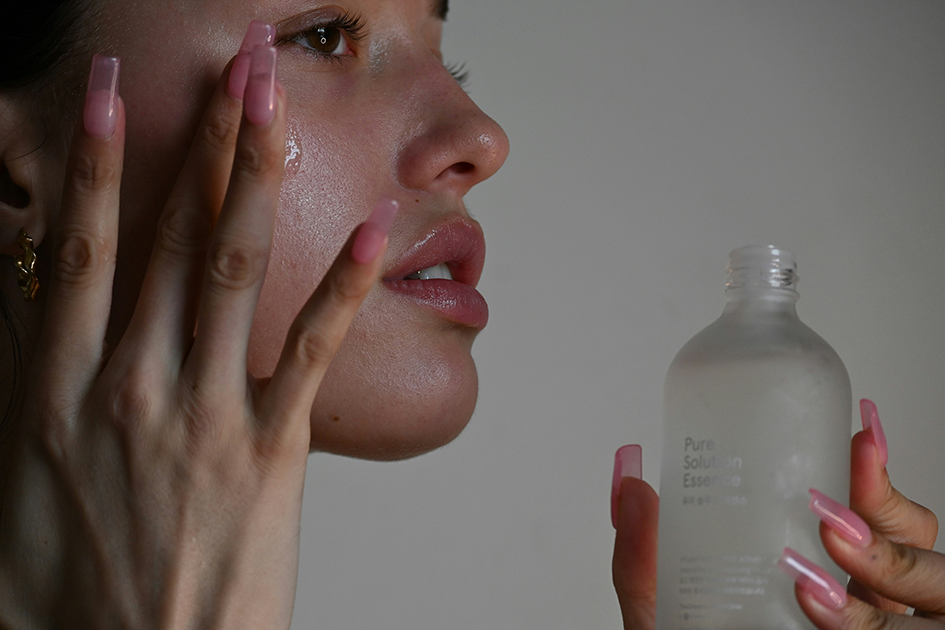
Photo by Laura Jaeger on Unsplash
The Simple Morning Skincare Order
For most women, a basic morning skincare routine follows this order:
- Gentle cleanser
- Prescription or targeted treatment, if used
- Serum, if used
- Eye cream, if used
- Moisturizer
- Broad-spectrum sunscreen
- Makeup
Always follow the directions provided with prescription treatments or instructions from your dermatologist.
Why Skincare Order Matters More Than You Might Think
Most skincare products are designed to do different jobs.
Some are meant to deliver active ingredients directly to the skin. Others help lock in moisture. Some create a protective layer that shields the skin from the outside world.
When products are applied in the wrong order, they may not perform as effectively as they could.
A practical approach is to apply prescription or targeted treatments after cleansing, followed by lighter optional products, moisturizer, and sunscreen. Product instructions still matter, because some active ingredients or prescription treatments may require a different order.
That doesn’t mean you need to obsess over every drop of serum or spend twenty minutes in front of the mirror each morning. It simply means giving your products the best chance to do what they were designed to do.
And perhaps even more importantly, it helps keep your routine simple and intentional.
Start With Clean Skin
Before applying anything else, it helps to begin with a clean canvas.
During the night, your skin continues producing oil and sweat. Residue from your evening skincare routine may also remain on the surface of the skin by morning.
A gentle cleanser helps remove that buildup and prepares your skin for the products that follow.
There is sometimes debate about whether everyone needs to cleanse in the morning. Some dermatologists believe a splash of water may be enough for certain people with very dry or sensitive skin. Others prefer starting the day with a mild cleanser.
The best approach often depends on your skin type and how your skin feels when you wake up.
If your skin tends to feel oily or congested in the morning, cleansing is usually a good idea. If your skin is extremely dry or sensitive, you may find that a gentler approach works better.
Expert Insight
The American Academy of Dermatology recommends washing the face with a gentle, non-abrasive cleanser and avoiding harsh scrubbing, which can irritate the skin. Cleansing removes oil, dirt, and residue before treatment and moisturizing products are applied.
Where Serums Fit Into the Picture
Once your skin is clean, this is typically the point where serums enter the routine.
Serums are usually lightweight products designed to deliver concentrated ingredients. Depending on the formula, they may focus on hydration, brightening, antioxidant protection, or other skincare concerns.
Vitamin C remains one of the most popular morning serums, and for good reason. Many women use it to support brighter-looking skin and help defend against environmental stressors throughout the day.
What makes serums different from moisturizers is their texture. Because they are generally thinner, they are usually applied first.
That said, skincare doesn’t need to become a chemistry experiment.
If you don’t use a serum, that’s perfectly fine. A healthy skincare routine is not defined by how many products you own. Consistency often matters far more than complexity.
Interesting Fact
Vitamin C plays an important role in collagen production and antioxidant protection. Research also suggests that well-formulated topical vitamin C products may support collagen synthesis and help with signs of photoaging and uneven pigmentation.
However, vitamin C can be unstable, and results may depend on the formulation, concentration, packaging, and how consistently the product is used.
The Role of Moisturizer
Moisturizer is one of those products that people often underestimate.
Many women assume they only need moisturizer if their skin feels dry. In reality, hydration is important for nearly every skin type.
Think of moisturizer as support for your skin barrier.
Small daily habits can have a surprisingly large impact on the skin barrier, from avoiding harsh cleansers to protecting your skin from unnecessary irritation.
Your skin barrier is the outer layer of your skin that helps retain moisture while protecting against environmental irritants. When it becomes compromised, skin may feel dry, sensitive, tight, or more reactive than usual.
Many women mistake these symptoms for simple dryness when they may actually be signs that the skin barrier needs extra support and recovery.
A good moisturizer helps reduce water loss and supports the skin’s natural protective function.
If your skin often feels tight, dull, or uncomfortable even after applying skincare products, dehydration may be part of the problem. Understanding the difference between dry and dehydrated skin can help you choose products that better support your skin’s needs.
For some women, that may mean a lightweight gel formula. For others, especially during colder months, it may mean a richer cream.
The goal is not necessarily to find the most expensive moisturizer on the market. The goal is to find one that leaves your skin feeling comfortable, balanced, and hydrated.
The Step Many Women Still Skip
If skincare experts around the world agree on one thing, it is the importance of sunscreen.
And yet, sunscreen remains one of the most commonly skipped skincare products.
Some women apply it only during summer. Others use it only at the beach. Some avoid it altogether because they dislike the texture.
The reality is that everyday sun exposure adds up over time.
Even short periods spent walking outdoors, driving, or sitting near a window can contribute to cumulative sun exposure throughout the years.
This is why sunscreen should generally be the final step in your morning skincare routine, applied after moisturizer and before makeup.
Choose a broad-spectrum, water-resistant sunscreen with SPF 30 or higher. Apply it to exposed skin and follow the product directions for reapplication, especially after sweating, swimming, or spending extended time outdoors.
Interesting Fact
In a randomized Australian study that followed adults for four and a half years, participants assigned to daily sunscreen use showed 24% less progression of visible skin aging than participants who used sunscreen at their own discretion.
The study suggests that consistent sunscreen use can help reduce photoaging over time, not only prevent sunburn.
What About Eye Cream?
Eye cream is one of the most debated products in skincare.
Some women swear by it. Others see little difference compared to a regular moisturizer.
If you use an eye cream, it is commonly applied after lightweight treatments and before or alongside moisturizer, depending on the product. Follow the directions on the packaging, especially when the formula contains active ingredients.
The skin around the eyes tends to be thinner and more delicate than other areas of the face, which is why some products are specifically formulated for this area.
Still, not everyone needs a separate eye cream.
For many women, a good moisturizer and consistent sun protection may be enough.
As with many aspects of skincare, there is rarely a one-size-fits-all answer.
Common Mistakes That Can Make a Good Routine Less Effective
Sometimes the problem isn’t the products themselves. It’s the habits surrounding them.
In fact, some of the most common skincare mistakes have little to do with the products you buy and much more to do with how you use them every day.
One common mistake is constantly switching products in search of instant results. Healthy skin changes gradually, and most products need time before their benefits become noticeable.
Another mistake is assuming that more products automatically lead to better results. In reality, adding too many active ingredients at once can sometimes increase irritation rather than improve the skin.
And then there is the temptation to skip sunscreen because the weather looks cloudy.
Unfortunately, your skin doesn’t care whether the sky is blue or grey.
Consistency is usually what makes the biggest difference.
When to Simplify Your Routine
More products do not always mean better results.
If your skin begins to sting, burn, peel, itch, or become unusually red after adding a new product, stop using the newest addition and return to a simple routine with a gentle cleanser, moisturizer, and sunscreen.
Introduce active ingredients one at a time whenever possible. If irritation persists, acne becomes painful, or you are unsure which products are appropriate for your skin, speak with a board-certified dermatologist.
A Simple Morning Routine That Works for Most Women
If all of this still feels overwhelming, remember that skincare does not need to be complicated.
For many women, a simple morning routine looks something like this:
- Cleanser
- Serum (optional)
- Moisturizer
- Sunscreen
That’s it.
You don’t need ten products. You don’t need a bathroom shelf that looks like a skincare store.
You simply need a routine that feels realistic and sustainable.
Frequently Asked Questions
How long should I wait between skincare products?
You usually do not need to wait several minutes between every layer. Let each product settle enough that the next one can be applied comfortably without excessive pilling, and follow specific instructions for prescription treatments or active ingredients.
Do I need to use a serum every morning?
No. Serum is optional. A simple routine with cleansing as needed, moisturizer, and broad-spectrum sunscreen may be enough for many women, while a serum can be added for a specific concern such as hydration or uneven-looking skin.
Can I skip moisturizer if my sunscreen is moisturizing?
Sometimes. If your sunscreen leaves your skin comfortable and adequately moisturized, a separate moisturizer may not always be necessary. Dry, dehydrated, or sensitive skin may still benefit from moisturizer underneath.
Does sunscreen always go after moisturizer?
For a typical morning routine, sunscreen is generally the final skincare step before makeup. Follow the directions on the sunscreen itself, especially if you are using prescription treatments or other products with specific application instructions.
Final Thoughts
The best order to apply your morning skincare products isn’t really about following strict rules.
It’s about understanding what each product is designed to do and giving it the best opportunity to work.
For most women, that means starting with clean skin, applying lightweight treatment products first, following with moisturizer, and finishing with sunscreen.
The beauty of skincare is that it doesn’t have to be perfect.
A simple routine practiced consistently will almost always outperform an elaborate routine that is difficult to maintain.
Your skin doesn’t need perfection every morning.
It simply needs a little care, a little protection, and a routine that fits comfortably into your everyday life.
If your skin needs a gentler source of lasting hydration, explore our guide to the best moisturizers for dry and sensitive skin to compare dermatologist-favorite options and find one that fits your routine.
Have you always followed the same morning skincare routine?
Which product has made the biggest difference for your skin?
Share your thoughts in the comments — we’d love to hear from you.