

When your skin suddenly feels tight, rough, itchy, or sensitive to products you normally tolerate, the problem may not be that you need more skincare.
Sometimes, your skin needs less.
Your skin barrier is the outermost protective layer of the skin. Dermatologist Melissa Piliang, MD, describes it simply:
“Your skin barrier is basically your outer layer of the skin.”
This layer helps keep water in while helping keep irritants and microorganisms out. When it becomes disrupted, skin may feel dry, flaky, itchy, tender, or unusually sensitive, and even familiar products may start to sting.
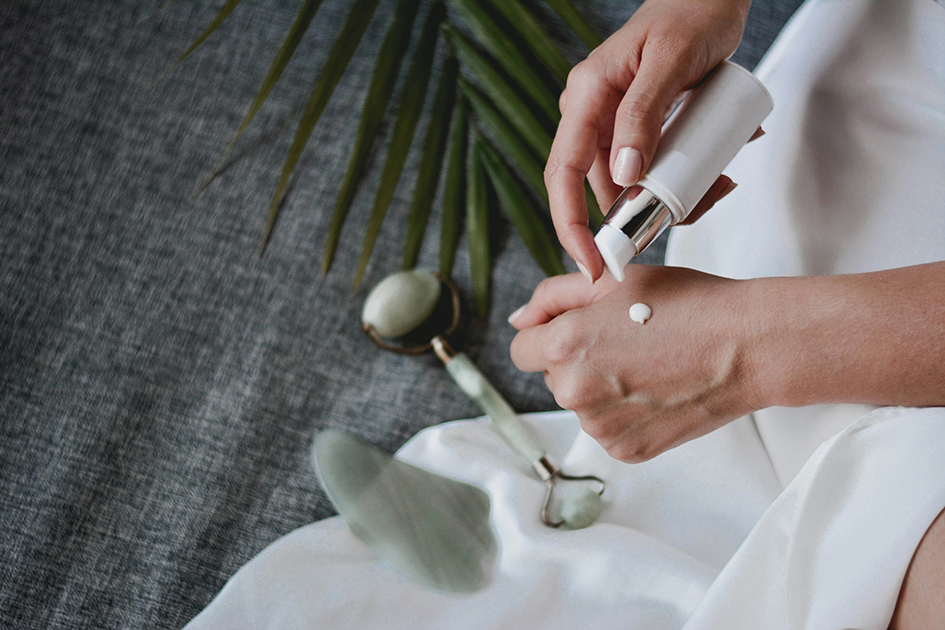
Photo by Content Pixie on Unsplash
How Do You Know Your Skin Barrier May Be Irritated?
Common signs can include:
- tightness after cleansing
- dryness or flaking
- increased sensitivity
- burning or stinging when applying products
- rough texture
- persistent redness or irritation
These symptoms are not specific to barrier damage. Eczema, rosacea, contact dermatitis, and other skin conditions can look similar.
If your skin frequently reacts to products, our guide to signs of sensitive skin can help you look more closely at the pattern.
1. Cleanse Gently, Not Aggressively
Clean skin does not need to feel squeaky or tight.
Board-certified dermatologist Joyce Davis, MD, puts it well:
“You want to make sure your cleanser puts moisture into the skin, rather than taking it out.”
Look for a gentle cleanser and avoid aggressive scrubbing. Washing the face twice daily is generally enough for most people, with additional cleansing after heavy sweating when needed.
If your face feels uncomfortable immediately after cleansing, your cleanser or cleansing routine may be too harsh.
2. Skip Very Hot Water
Long, very hot showers may feel relaxing, but they are not especially kind to dry or irritated skin.
Use lukewarm water and avoid leaving your face under very hot water for long periods.
After cleansing, pat rather than rub your skin dry.
These small changes matter because an irritated barrier does not benefit from additional friction or unnecessary stripping.
3. Moisturize While Skin Is Still Slightly Damp
Moisturizer does more than make skin feel soft.
It helps reduce water loss and supports the outer layer of the skin. Applying it shortly after washing, while the skin is still slightly damp, can help trap moisture.
Ceramides are particularly relevant because they are natural lipids found in the epidermis. Cleveland Clinic notes that ceramides make up about 50% of the epidermis, and moisturizers may also combine them with ingredients such as glycerin, hyaluronic acid, dimethicone, or other humectants and occlusives.
You do not need all of these ingredients in one product. What matters most is finding a moisturizer that leaves your skin comfortable.
4. Be Careful With Too Many Active Ingredients
Retinoids, exfoliating acids, vitamin C, benzoyl peroxide, and other active ingredients can be useful when they address a specific skin concern.
But more products do not automatically mean better skin.
The American Academy of Dermatology warns that using too many skincare products, particularly multiple anti-aging treatments, can irritate the skin.
If your skin suddenly becomes tight, red, flaky, or starts stinging, consider whether you recently:
- increased the frequency of an active ingredient
- combined several strong products
- started exfoliating more often
- introduced multiple new products at once
If exfoliation may be part of the problem, see our guide to how often you should exfoliate.
Sometimes the best short-term strategy is not adding a “barrier repair” serum. It is temporarily removing whatever is irritating the skin.
5. Use Sunscreen Consistently
Protecting the barrier also means protecting skin from ultraviolet radiation.
For daily sun protection, the American Academy of Dermatology recommends a broad-spectrum sunscreen with SPF 30 or higher, together with shade and protective clothing when appropriate.
The best sunscreen for your routine is one you can use consistently without causing irritation.
If a particular formula repeatedly burns or stings your skin, try another formulation rather than assuming sunscreen itself is the problem.
6. Introduce New Products One at a Time
When five products enter your routine during the same week and irritation appears, identifying the culprit becomes difficult.
Introducing products gradually gives you a better chance of knowing what your skin tolerates.
AAD dermatologists recommend testing a new skincare product on a small area twice daily for seven to ten days before wider use. If redness, itching, swelling, or another reaction develops, stop using it.
This is particularly useful if your skin is already reactive.
7. Let a Simple Routine Be Enough
Skin barrier care does not need seven serums.
For many women, a temporary simplified routine can be:
Morning: gentle cleansing if needed → moisturizer → sunscreen
Evening: gentle cleanser → moisturizer
Once your skin feels comfortable again, you can gradually reintroduce treatments that serve a clear purpose.
Our simple skincare routine for beginners shows how to build a routine without layering unnecessary products.
What About Drinking More Water and Eating “Skin Foods”?
Adequate hydration and balanced nutrition matter for overall health, but drinking extra glasses of water is not a substitute for topical barrier care.
Likewise, berries, avocado, salmon, and leafy greens can all be nutritious foods, but eating them does not directly “repair” a damaged skin barrier.
That is why I would remove the old article’s promise that drinking more water or choosing particular foods will noticeably restore the barrier.
For irritated skin, the most practical steps are usually much simpler: reduce irritation, cleanse gently, moisturize, and protect the skin from the sun.
When It May Not Be Just a Damaged Skin Barrier
Do not assume every persistent rash or burning sensation simply means your barrier needs repairing.
Contact dermatitis, for example, can cause itching, burning, swelling, very dry or cracked skin, and sometimes blisters. A dermatologist can also help identify an allergy or another condition when symptoms keep returning.
Consider professional advice if you have persistent or worsening:
- redness
- painful burning or stinging
- severe itching
- cracking or bleeding
- swelling
- recurring rash
- signs of infection
Final Thoughts
Protecting your skin barrier is less about finding a miracle product and more about not repeatedly irritating the skin you are trying to help.
Gentle cleansing, regular moisturizing, sensible use of active ingredients, and daily sun protection can do more than a complicated shelf of products.
And when your skin becomes irritated, simplifying your routine for a while may be exactly what it needs.
Has your skin ever suddenly started stinging, feeling tight, or reacting to products you normally use?
Sometimes simplifying a routine can reveal which step was causing the irritation.
Share what helped your skin feel comfortable again in the comments below. Your experience may help another woman dealing with the same frustration.