
You finish breakfast and find yourself thinking about lunch before the morning is halfway over.
If the question “Why am I always hungry?” keeps coming up, notice when hunger returns and what else has changed.
Your meals, sleep, and menstrual cycle can all affect your appetite.
Photo by Alex Green on Pexels
In This Article
Hunger and Cravings
An empty feeling in your stomach can be a cue that you’re hungry. A craving is a desire for a specific food, such as chocolate. You can feel both at the same time. When either comes up, think about when you last ate and how satisfying the meal was.
Ghrelin helps signal hunger and often rises between meals. Fat cells release leptin, which signals how much energy your body has stored and helps regulate appetite over time.
1. Your Meals May Not Be Filling Enough
If hunger returns soon after a meal, look at what was on your plate. In Cleveland Clinic’s guide to frequent hunger, registered dietitian Julia Zumpano, RD, LD, explains how protein, fiber, and fat can help you feel satisfied.
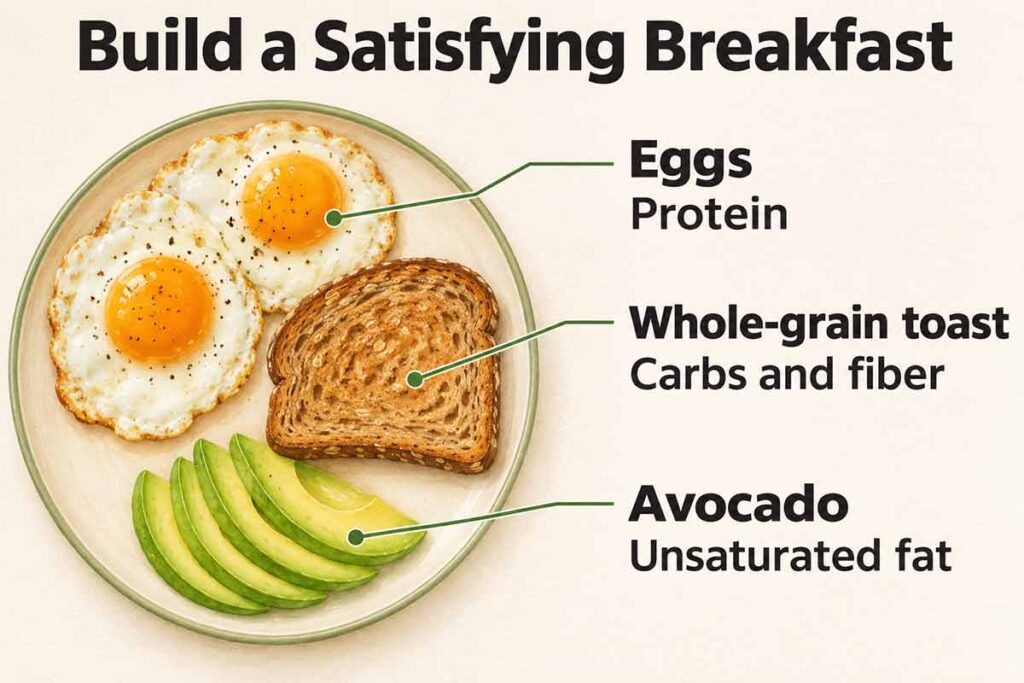
Our guide to foods that help you feel full longer has more ideas.
2. Poor Sleep Can Change Your Appetite
A review of sleep restriction trials found that adults felt hungrier and ate more when their sleep was restricted. Studies have found mixed effects on ghrelin and leptin after sleep loss.
If your hunger is stronger after short nights, note how long you slept and when you feel hungry the next day. Our guide to evening habits for better sleep can help you build a routine.
3. Stress Can Change Your Appetite
Harvard Health Publishing explains that brief stress can curb appetite. When stress persists, levels of the stress hormone cortisol may stay elevated, which can increase appetite. If you’re hungry at the end of a stressful day, check whether you also had less time to eat. A rushed lunch can leave you hungry later, even after the pressure eases.
4. Your Menstrual Cycle May Affect Appetite
Appetite changes and food cravings can be part of premenstrual syndrome (PMS). A review of energy intake across the menstrual cycle found that participants consumed more calories on average in the phase after ovulation than in the phase before it. If your appetite seems to follow a monthly pattern, note when it picks up and when it eases.
5. You May Need More Food
Long gaps between meals or smaller portions may leave you hungry. Your energy needs can rise when you’re more active than usual or breastfeeding. If hunger regularly returns before your next meal, try a larger serving or have a snack when you need one.
6. Some Medications Can Increase Appetite
Some medications, including corticosteroids, can increase appetite. If your appetite changed after you started a medication or changed the dose, tell the clinician who prescribed it. Ask what to do before changing how you take it.
7. A Health Condition May Be Involved
After a meal, insulin helps glucose enter your cells so they can use it for energy. In diabetes, the body may make too little insulin or have trouble using it. Feeling very hungry even after meals can be a symptom of diabetes.
An overactive thyroid can also increase appetite, sometimes alongside a racing heart, sensitivity to heat, or weight loss.
Try This Today
Pick a meal that often leaves you hungry again soon. Add one food with protein or fiber. Try chickpeas in a salad or Greek yogurt in oatmeal, and notice when you feel hungry again.
When to Talk to a Healthcare Professional
Make an appointment if your appetite stays unusually strong or you repeatedly feel very hungry after meals. Get medical advice promptly if you’re also unusually thirsty, urinating more often, or losing weight without trying. Bring a list of your medications and a note of when the change began.
If unusual thirst or frequent urination comes with fast, deep breathing or vomiting that prevents you from keeping fluids down, seek emergency care.
Frequently Asked Questions
Why am I always hungry even after eating?
Your last meal may have been smaller than usual, or you may have been more active. If you’re still hungry as you finish eating, try a little more of the meal. If feeling very hungry after meals that usually satisfy you is new and keeps happening, tell your healthcare professional.
Is being hungrier before my period normal?
It can be. You might want a larger lunch or an extra snack in the days before your period. Note whether your appetite returns to its usual pattern once your period starts.
Does feeling hungry and shaky mean my blood sugar is low?
Sudden hunger and shakiness can occur with low blood glucose, especially if you take insulin or certain other diabetes medicines. If you have diabetes, follow your care team’s instructions for checking and treating low blood sugar. Tell a healthcare professional if these episodes keep happening.
Final Thoughts
Start with the time of day when hunger usually catches you off guard. See whether it follows a light meal, a short night, or a point in your cycle. If it keeps happening even after meals that usually satisfy you, share that detail with your healthcare professional.
If you’re already comparing magnesium products, our guide to magnesium supplements for women explains what to look for on the label.
Which meal keeps you satisfied on a busy day?
What do you usually put in it?
Share an easy meal idea in the comments.