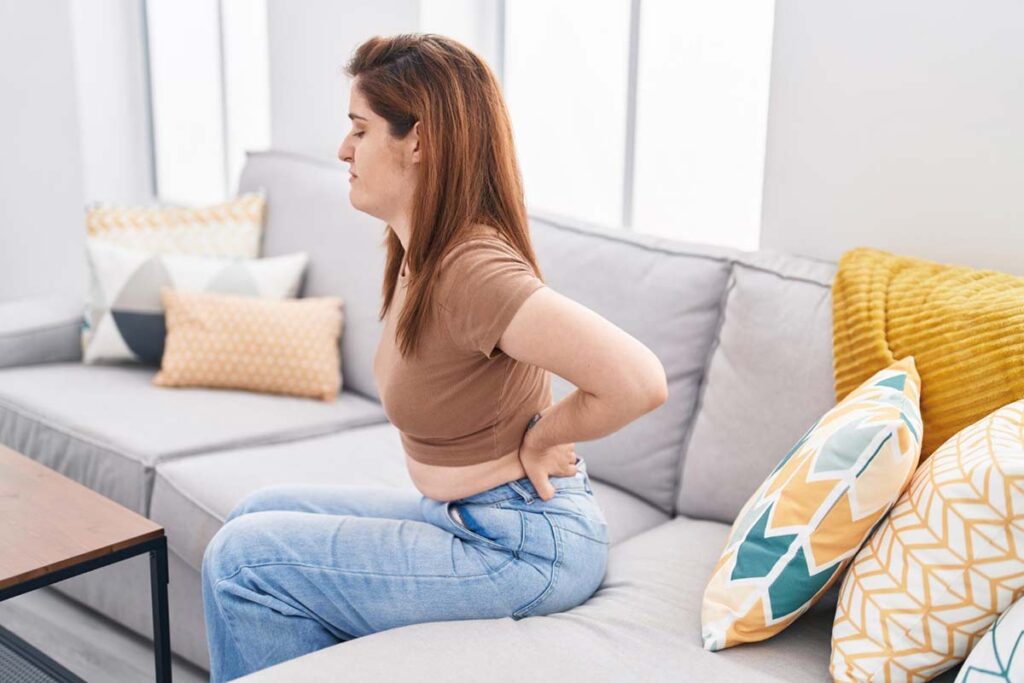
Your period starts, and the ache settles across your lower back. By lunchtime, your thighs feel sore too, even though you have done nothing strenuous. Sitting through a meeting means shifting in your chair, trying to get comfortable.
Period cramps can be felt beyond the lower belly. Uterine contractions and the way pain signals travel help explain the wider ache.
Its timing, intensity, and any changes offer clues about when home care may help and when to seek medical advice.
Photo by krakenimages.com on Magnific
Why Period Cramps Can Reach Your Back and Thighs
During menstruation, hormone-like chemicals called prostaglandins help the uterus contract and shed its lining.
“This release of prostaglandins causes your uterus to cramp and contract,” explains Cleveland Clinic OB-GYN Alison Stalzer, MD.
Pain signals use interconnected nerve pathways, so the place where the brain registers pain can differ from its source. This is called referred pain and helps explain how uterine cramps can be felt in the back or thighs. Where you feel pain does not always show where it began.
What a Typical Pattern Can Look Like
With primary dysmenorrhea – period pain without an underlying pelvic condition – cramps often begin shortly before bleeding, peak around the first day, and ease within two or three days. The discomfort can include a dull backache or aching thighs.
Note when pain starts, how long it lasts, whether one or both thighs ache, and what helps. Tracking it alongside changes in energy, mood, and cravings can build a fuller picture of your cycle.
What May Ease the Ache
For familiar, manageable cramps, you could try:
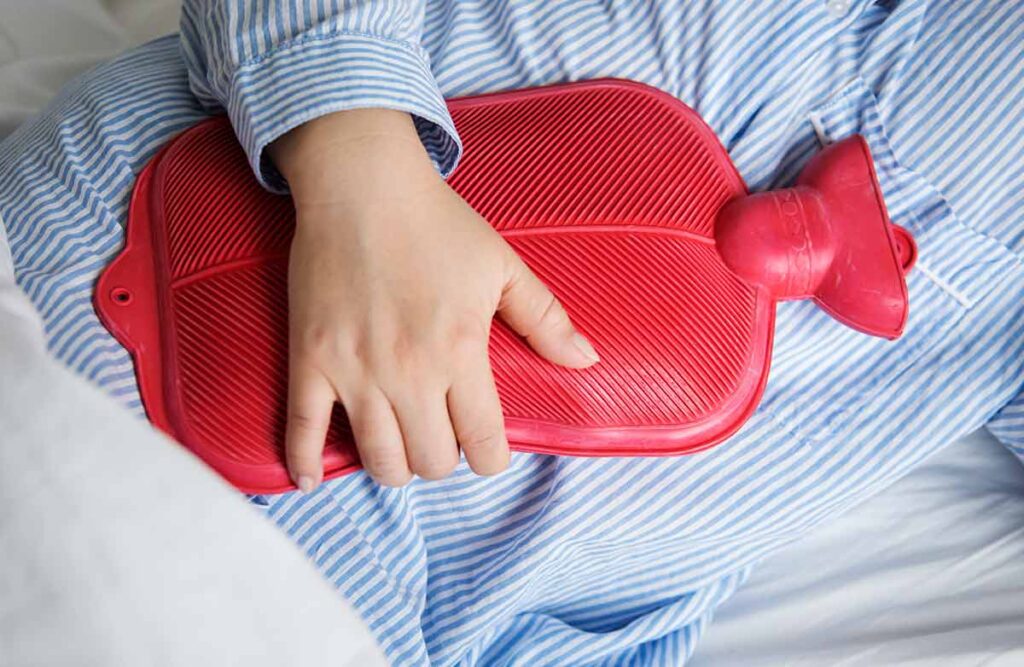
- Gentle warmth: a warm bath or a hot-water bottle wrapped in a towel.
- Comfortable movement: a short walk or gentle stretching, if it feels manageable.
- Light massage: gently massaging your lower back may help you feel more comfortable.
Follow heat-product instructions and protect your skin.
Ibuprofen can help menstrual pain, but follow the label and check with a pharmacist if you take other medicines, have a medical condition, or could be pregnant.
When the Pattern Deserves Medical Attention
In a published NewYork-Presbyterian Q&A, OB-GYN Alessandra Hirsch, MD, advises speaking with your doctor “if your pain is disruptive, worsening, or comes with other symptoms”.
Book an appointment if pain repeatedly interrupts work or sleep, lasts beyond your usual cramp days, or comes with painful sex or bowel movements. Endometriosis, adenomyosis, and fibroids are among the possible causes. You do not have to wait until pain becomes unbearable to ask for help.
If pain comes with heavier periods in your 40s, avoid assuming the change is simply perimenopause.
Get emergency care for severe or rapidly worsening pelvic pain, especially with fainting or heavy bleeding. Seek urgent assessment for pelvic pain with fever or a possible pregnancy.
Frequently Asked Questions
Does thigh pain during my period mean I have endometriosis?
Not by itself. Thigh pain can also occur with primary dysmenorrhea. The location alone cannot identify the cause; your clinician considers the wider pattern and whether examination or tests are needed.
What if pain shoots down one leg?
Shooting pain with tingling, numbness, or weakness can suggest a nerve problem such as sciatica. Have these symptoms assessed rather than automatically linking them to your period.
Final Thoughts
An ache in your back or thighs can be part of menstrual cramps. Pay attention to when it starts, how long it lasts, and whether it is changing. Pain that keeps interrupting your day deserves attention.
Do your period cramps reach your lower back or thighs?
Where do you feel the ache most?
Share what you have noticed about its timing in the comments.