

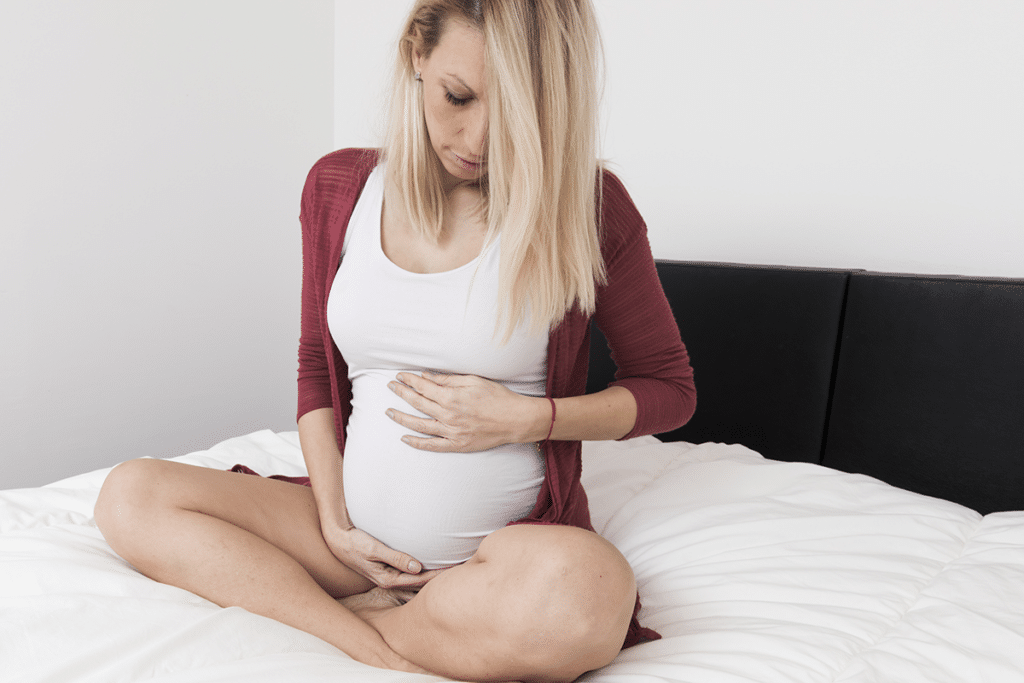
You stand up quickly, roll over in bed, or sneeze, and suddenly feel a sharp pull low in your belly. It can be startling, especially when it happens for the first time.
Round ligament pain during pregnancy is usually harmless, but abdominal pain deserves attention because not every ache has the same cause.
Knowing the typical pattern can help you respond calmly without dismissing symptoms that need medical care.
Image credit: Photo by Magnific
What Is Round Ligament Pain?
The round ligaments are two bands of tissue that help support the uterus. As the uterus grows, these ligaments stretch and carry more tension.
The result may be a brief ache, cramp, pulling feeling, or sharp pain in the lower abdomen, groin, or hip. It is most common during the second trimester, although it can appear earlier or later.
It is also one of the common pregnancy symptoms by trimester that may become more noticeable as the uterus expands.
What Does It Usually Feel Like?
Typical round ligament pain is often:
- Sharp, stabbing, pulling, or cramp-like
- Felt on one side or both sides
- Low in the belly, pelvis, hip, or groin
- Triggered by a sudden movement
- Brief and improved by slowing down, changing position, or resting
Common triggers include standing up quickly, rolling over in bed, coughing, sneezing, laughing, or turning suddenly.
A Doctor’s Real-World Explanation
In a Cleveland Clinic OB/GYN discussion, Dr. Tammy Parker describes a pattern she commonly hears from patients: a quick, sharp pain that travels from the lower belly toward the vaginal area and appears with movements such as rolling over or rising from bed.
She explains that this kind of discomfort often improves with rest. Pain that remains intense or does not ease should be evaluated, rather than automatically blamed on stretching ligaments.
What May Help?
Move More Slowly
Pause before standing, rolling over, or changing direction. Giving your body an extra second may reduce the sudden pull on already stretched ligaments.
Try turning onto your side before rising from bed instead of sitting straight up in one quick movement.
Support Your Belly
Gently holding the underside of your belly when coughing, sneezing, or laughing may help reduce the sudden tug.
Some women also feel more comfortable with a pregnancy support band. Ask your prenatal healthcare provider whether this kind of support is appropriate for you.
Rest and Change Position
Try lying on the side opposite the pain, with a pillow between your knees or beneath your belly. Changing position slowly may be enough to settle a brief episode.
If discomfort is regularly disturbing your rest, these tips for managing pregnancy sleep problems may help you create a more supportive nighttime routine.
A supportive pregnancy pillow may also make side sleeping and belly support more comfortable.
A warm bath, rather than a hot one, may also feel soothing.
Keep Movement Gentle
Regular safe exercise during pregnancy may support overall comfort, but avoid movements or positions that clearly make the pain worse.
Your prenatal provider can help you choose stretches and activities that fit your pregnancy and health needs.
When Is It More Than Round Ligament Pain?
Round ligament pain is usually brief. Constant, severe, worsening, or unfamiliar abdominal pain should not be self-diagnosed.
Contact your healthcare provider promptly if the pain appears with:
- Vaginal bleeding or fluid leakage
- Fever or chills
- Nausea or vomiting unrelated to morning sickness
- Painful urination or blood in the urine
- Regular contractions or lower-back pressure
- Pain that does not improve with rest
- Difficulty walking, standing, or finding any comfortable position
Severe or constant abdominal pain, possible contractions, bleeding, or fever during pregnancy require prompt medical advice.
Final Thoughts
Round ligament pain can feel dramatic even when it lasts only a few seconds. Moving slowly, resting, and supporting your growing belly may make everyday activities more comfortable.
Still, trust your instincts. If the pain feels different, persistent, or worrying, contact your prenatal healthcare provider rather than trying to explain it away.
Your body is changing quickly, and asking for reassurance is a sensible part of pregnancy care.
If your provider agrees that extra support may be appropriate, a maternity band can sometimes make everyday movement feel more comfortable. Compare our picks for pregnancy belly and pelvic support before choosing a style.
Did round ligament pain catch you by surprise during pregnancy?
Share which movements triggered it and what helped you feel more comfortable.
Your experience may reassure another mom-to-be going through the same thing.