

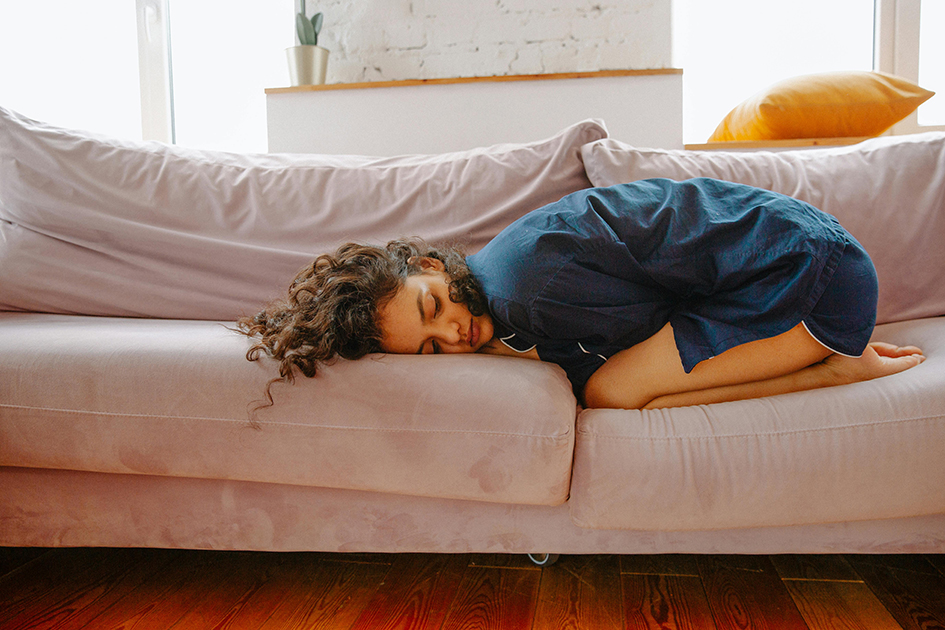
You slept reasonably well, but a few days before your period you suddenly feel as if someone turned down your energy.
Work takes more effort.
Your concentration slips.
You may feel sleepy, hungry, irritable, or simply less motivated than usual.
Fatigue is a recognized symptom of premenstrual syndrome (PMS), along with sleep problems, food cravings, mood changes, and difficulty concentrating.
But feeling tired before your period does not automatically mean your hormones are “out of balance.”
The more useful question is whether the fatigue follows a predictable pattern — and whether anything else may be contributing.
Photo by Polina Zimmerman on Pexels
Why Can You Feel More Tired Before Your Period?
PMS symptoms usually appear during the days before menstruation and improve after the period begins.
ACOG lists fatigue, insomnia, increased napping, poor concentration, appetite changes, and food cravings among recognized PMS symptoms.
Exactly why some women experience stronger symptoms than others is not completely understood, but normal changes in reproductive hormones and brain chemicals are thought to play a role.
And PMS is common.
Mayo Clinic estimates that as many as 3 in 4 menstruating women have experienced some form of PMS.
1. Your Sleep May Change Before Your Period
You may spend the same number of hours in bed and still wake up feeling less refreshed.
ACOG notes that restless sleep is more likely after ovulation and that insomnia can be common around the days just before and after menstrual bleeding begins.
That means daytime fatigue may sometimes be partly a sleep problem, not simply a matter of having “low energy.”
Try keeping bedtime and wake time reasonably consistent and notice whether your sleep changes at the same point in your cycle.
Our guide to how hormones affect sleep explains that connection in more detail.
2. Your Appetite and Cravings May Shift Too
A few days before your period, breakfast may suddenly feel less satisfying or chocolate may sound unusually appealing.
That is not unusual.
Instead of trying to suppress every craving, focus on meals that contain a mix of protein, fiber-rich carbohydrates, and healthy fats.
For example:
- Greek yogurt with oats, berries, and nuts
- eggs with whole-grain toast and fruit
- lentils with rice and vegetables
- an apple with peanut butter
There is no special “PMS diet” that works for everyone.
The goal is simply to eat enough and avoid relying entirely on caffeine or sweet snacks when you are already tired.
For practical meal ideas, see what to eat for steadier energy.
3. Regular Movement May Help – Even When You Do Not Feel Like Exercising
Feeling tired does not mean you have to force yourself through an intense workout.
But regular aerobic activity may help some PMS symptoms.
ACOG specifically notes that exercise may reduce fatigue and depressed mood associated with PMS.
A short walk, easy cycling, swimming, or another activity you tolerate well can be enough to keep moving.
Cleveland Clinic OB-GYN Sara Yuen, MD, puts the larger approach simply:
“Adopting healthy lifestyle habits can also make a big difference.”
She also recommends regular exercise, adequate sleep, and stress reduction as part of managing PMS symptoms.
4. Stress Can Make an Already-Tired Week Feel Harder
A busy workload does not suddenly become lighter because your period is approaching.
If PMS fatigue arrives during a week of poor sleep, deadlines, caregiving, or emotional stress, the combination may feel much stronger.
This does not mean stress is “damaging your hormones.”
It simply means several sources of fatigue can happen at the same time.
On lower-energy days, consider reducing optional commitments, taking a short walk, going to bed earlier, or giving yourself a quieter evening rather than trying to maintain exactly the same pace every day.
5. Track the Pattern Instead of Guessing
One tired afternoon does not tell you much.
A repeating monthly pattern does.
For two or three cycles, note:
- when fatigue begins
- when your period starts
- how well you slept
- whether cravings or mood changes appeared
- whether symptoms improve after menstruation begins
ACOG recommends symptom tracking for at least 2 to 3 months when PMS is suspected.
That record can also be useful if you eventually discuss the symptoms with your healthcare provider.
When Fatigue May Not Be “Just PMS”
Not every case of exhaustion before a period is caused by PMS.
Thyroid disorders, depression, anxiety, sleep problems, medications, pregnancy, and other conditions can cause similar symptoms.
Iron deficiency is another consideration, particularly if your periods are very heavy.
The Office on Women’s Health notes that heavy menstrual bleeding can lead to iron-deficiency anemia, which commonly causes fatigue, weakness, dizziness, and shortness of breath.
If tiredness continues throughout the month rather than following a predictable premenstrual pattern, our guide to common reasons women feel tired may be a better starting point.
When to Talk to Your Healthcare Provider
Talk with your healthcare provider if fatigue is severe, worsening, or interfering with work, relationships, exercise, or everyday activities.
Also seek medical advice if you have:
- very heavy or prolonged periods
- dizziness or fainting
- shortness of breath
- significant depression or anxiety
- severe sleep problems
- symptoms that occur throughout the month
- a major change from your usual menstrual pattern
Severe mood symptoms before your period can also be a sign of premenstrual dysphoric disorder (PMDD), which deserves proper evaluation and treatment.
Frequently Asked Questions
Is it normal to feel very tired before your period?
Mild or moderate fatigue can occur as part of PMS.
If exhaustion is severe, happens throughout the month, or regularly interferes with daily life, it is worth discussing with a healthcare professional.
How many days before your period can fatigue start?
PMS symptoms commonly appear during the several days before menstruation, although timing varies from woman to woman.
Tracking two or three cycles can help you see your own pattern.
Can poor sleep make pre-period fatigue worse?
Yes.
Sleep can become more restless around menstruation, and insufficient or disrupted sleep can make daytime fatigue and concentration problems more noticeable.
Can heavy periods cause tiredness?
Heavy menstrual bleeding can contribute to iron-deficiency anemia over time.
If your periods are heavy and you also experience persistent fatigue, weakness, dizziness, or shortness of breath, ask your healthcare provider whether testing for anemia is appropriate.
Should I take iron or magnesium for PMS fatigue?
Do not automatically start supplements because you feel tired.
Iron should generally be used when deficiency has been identified or a healthcare professional recommends it.
Evidence for supplements marketed for PMS varies, and excessive amounts can cause side effects or interact with medications.
Final Thoughts
Feeling more tired before your period can be part of PMS, especially when fatigue appears alongside sleep changes, cravings, poor concentration, or mood symptoms.
Start by looking at the pattern rather than assuming something is wrong with your hormones.
Protect your sleep.
Eat enough.
Keep moving in ways that feel manageable.
And give yourself some room to slow down when your energy genuinely feels lower.
If fatigue becomes severe, persistent, or different from your usual monthly pattern, finding the cause matters more than simply pushing through it.
Tracking that pattern can sometimes reveal more than simply labeling every tired day as PMS.
Share what you have noticed in the comments — another woman may recognize the same monthly pattern.