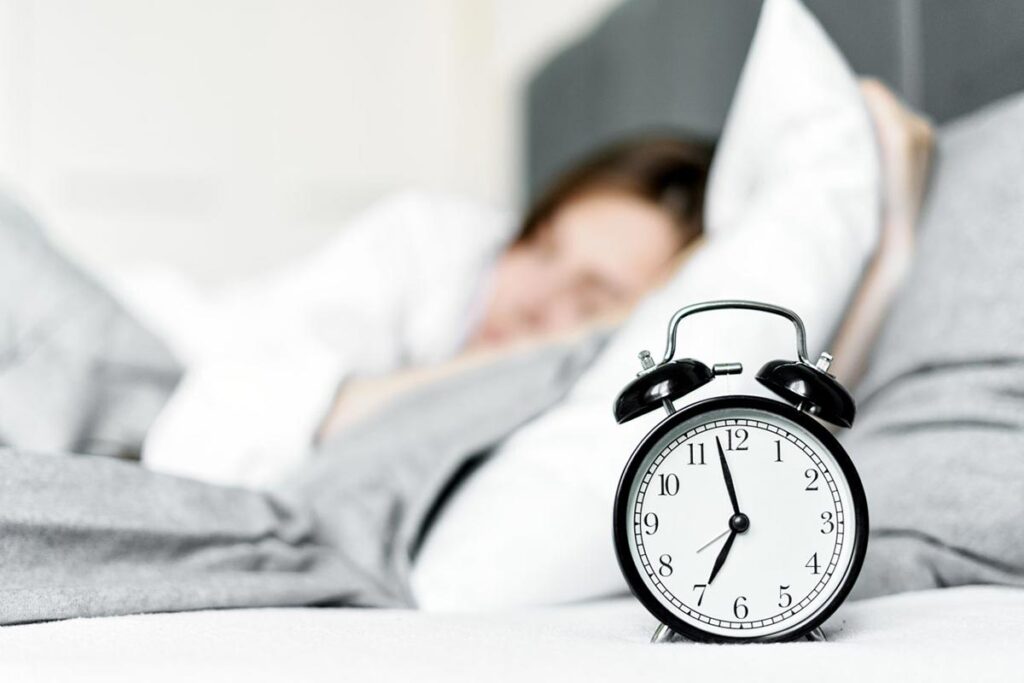
It’s still dark when you sit down with your coffee. There’s room for a mug, a bowl, and maybe a lamp next to your laptop. Then you start shopping and see 10,000 lux advertised on everything from a tablet-sized light to a panel taller than your monitor.
Seasonal affective disorder (SAD) is a type of depression that tends to return around the same time each year. In its most common form, symptoms begin in fall or winter and ease in spring. A light therapy lamp provides bright light indoors when daylight is limited. Light therapy is one treatment for winter-pattern SAD, according to the National Institute of Mental Health.
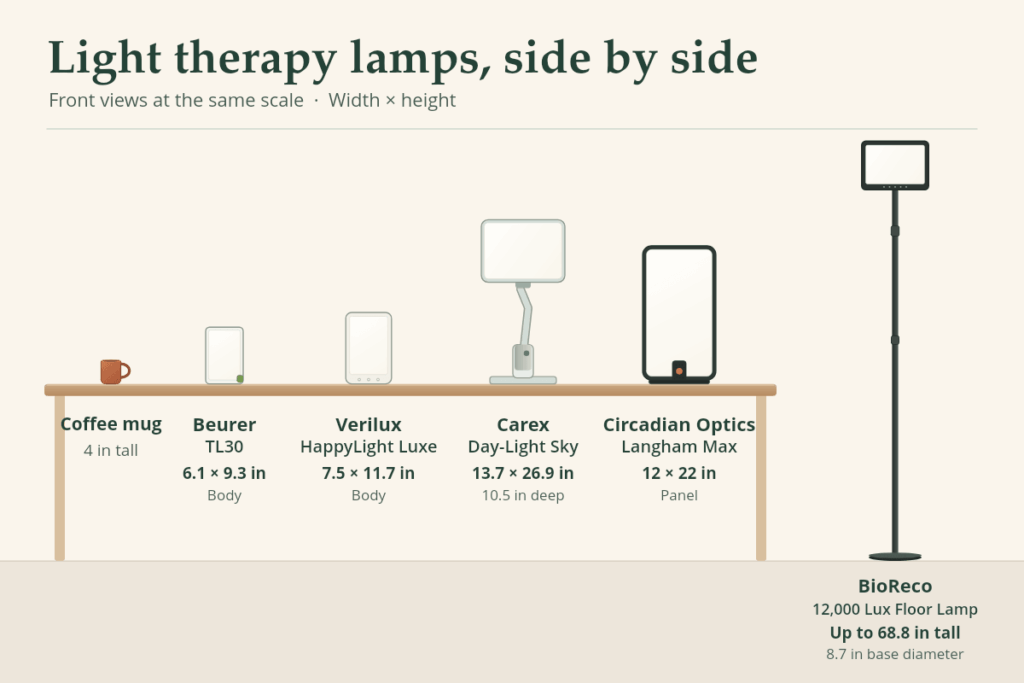
When comparing light therapy lamps, start with how far your eyes will be from the panel. Some lamps deliver their stated 10,000 lux only a few inches away. Others reach that level at 18 inches, with room for a plate and a mug in between. These five picks cover everything from a small desk to a reading chair.
Photo by israelbest on Pixabay
In This Article
Affiliate Disclosure
As an Amazon Associate, I earn from qualifying purchases. This article contains affiliate links, which may earn BloomHerLife a commission at no extra cost to you. Thank you for supporting BloomHerLife.
What 10,000 Lux Means Where You Sit
Lux measures how much light reaches a surface. Here, the useful reading is at eye level in your usual seat. Researchers who measured 24 light therapy devices found that the light reaching the observer fell as the distance increased. Larger light boxes tended to deliver more light at greater distances in that comparison of light boxes.
A light therapy box mimics bright outdoor light during the darker months. For winter-pattern SAD, 10,000 lux is a standard clinical light level. Both the light level at your eyes and the length of the session matter. Daily 30-minute sessions at this brightness helped ease symptoms in a controlled trial of bright light therapy.
At a kitchen table, a 6-inch gap puts the panel close to your face. If you prefer the lamp beyond your breakfast plate or beside your monitor, look for a model rated at that distance. A lamp can feel bright from farther away and still deliver less light than the number on the box.
Compare Five Light Therapy Lamps
I compared published brightness and measurement distance, UV information, panel size, positioning, and controls. The figures below come from manufacturer specifications or product listings. For a clinician-guided light therapy plan, prioritize a model that states how much light it delivers at the distance you’ll be using.
| Lamp | Best fit | Published brightness and distance |
|---|---|---|
| Verilux HappyLight Luxe | Adjustable desk lamp | 10,000 lux at 6 in. (15 cm) |
| Beurer TL30 | Compact and portable | 10,000 lux at about 4 in. (10 cm) |
| Carex Day-Light Sky | Adjustable tabletop stand | 10,000 lux at 12 to 14 in. (30 to 36 cm) |
| Circadian Optics Langham Max | Large panel and longer reach | 10,000 lux at 18 in. (46 cm) |
| BioReco 12,000 Lux Floor Lamp | Floor stand and remote | 12,000 lux advertised (measurement distance unconfirmed) |
Which Light Therapy Lamp Fits Your Space?
Verilux HappyLight Luxe
Best for an adjustable desk setup. The white HappyLight Luxe is my first pick if you want a slim panel with four brightness levels, three shades of white light, and a countdown timer. Its removable stand makes it easy to clear the table when you’re done.
The main trade-off is the short working distance at full output. Check whether you can place it beside your book or keyboard without having to lean forward. The 6-inch figure comes from the HappyLight Luxe manual.
See the HappyLight Luxe on Amazon (paid link)
Beurer TL30
Best for portability and simple controls. The TL30 is about the size of a small tablet, runs from a wall adapter, and has one power button. The stand works in portrait or landscape. Its short rated distance suits a close-up reading spot. See the Beurer TL30 specifications.
See the Beurer TL30 on Amazon (paid link)
Carex Day-Light Sky
Best for a dedicated spot at the table. The white Day-Light Sky has a 13.5-by-10-inch panel with adjustable height and tilt. You can leave room for breakfast or a book and angle the light down from above. Plan for a permanent spot if you can. The unit weighs just over 8 pounds and has a 10.5-inch front-to-back footprint. See the Carex Day-Light Sky specifications.
See the Carex Day-Light Sky on Amazon (paid link)
Circadian Optics Langham Max
Best if you sit farther back. The Max has the longest published 10,000-lux distance of these five picks. The dial adjusts brightness, and the 12-by-22-inch panel gives you a broad light source. Check that there’s room beside your screen or in front of your usual chair for a panel that tall.
Look for Max when you shop. The similarly named Standard has a smaller panel and reaches 10,000 lux at 12 inches, according to Circadian Optics’ model comparison.
See the Langham Max on Amazon (paid link)
BioReco 12,000 Lux Floor Lamp
Floor-standing option when a tabletop is out of reach. This black BioReco lamp has an adjustable stand, a swiveling head, and a remote you can use from your chair. The listing describes UV-free light and advertises 12,000 lux. Ask BioReco for the measurement distance before choosing it for a plan that calls for a specific light level at your seat.
See the BioReco floor lamp on Amazon (paid link)
How to Use a Light Therapy Lamp in the Morning
A common setup for winter-pattern seasonal affective disorder (SAD) uses a light box that filters out most or all UV light and delivers 10,000 lux at eye level. At that light level, a typical session lasts about 20 to 30 minutes and starts within an hour of waking, according to the Mayo Clinic light-box guide.
Sitting farther from the lamp can reduce the light reaching your eyes. Lower light levels generally require longer sessions for a similar effect. Follow your clinician’s plan for session length and the device’s instructions for distance and angle.
Set the lamp by something you already do after getting up. While you eat breakfast or read, keep your eyes open and your gaze on the table or page. Give the panel a clear path to your face, especially if a raised laptop screen sits between you and the light.
If the first hour of the day is usually rushed, look for a reliable place to sit in your usual morning routine.
Try This Today
Sit where you’d use the lamp and place a paperback upright where the panel would go. Check whether you can still reach your mug or keyboard without moving the book.
When to Ask a Clinician About Light Therapy
Psychiatrist Norman Rosenthal described treating Herb Kern, whose depression returned in a seasonal pattern and eased with bright-light treatment. Kern’s experience helped shape later research on SAD, as Rosenthal explains in the published case report. If your mood changes around the same time each year, tell your clinician when the changes begin and when they ease.
If low mood or loss of interest lasts most days for around two weeks, arrange an assessment. Seek help sooner if symptoms worsen or make work, relationships, or basic self-care harder. The National Institute of Mental Health focuses on both duration and how much symptoms interfere with daily life.
Talk with a clinician before using a light box if you have bipolar disorder, an eye condition such as retinal disease, or take medication that can increase light sensitivity. The Cleveland Clinic SAD guide explains that bright light can trigger mania or hypomania in people with bipolar disorder. If you develop headaches, eye strain, or trouble sleeping during sessions, pause and contact your clinician.
If you’re unsure whether to buy a lamp yet, take these light therapy questions to your appointment. Our seasonal depression guide covers what to bring up when your mood changes each winter.
Frequently Asked Questions
Does a Higher Kelvin Number Mean a Brighter Lamp?
Kelvin tells you how warm or cool the light looks. The Department of Energy lighting guide shows how it appears on a lighting label. On a lamp with adjustable color, look for a lux specification for the setting you plan to use.
Can I Use a Light Therapy Lamp After a Night Shift?
If you go to bed after a night shift, bright light at that time can make it harder to wind down. Tell your clinician when you work, sleep, and wake so the schedule accounts for your shifts. The timing of bright light is covered in the CDC night-shift guidance.
What if My Lamp Has No Timer?
A phone or kitchen timer will work if you need to keep track of a set session length. Start it when you switch on the lamp, and keep the power button within reach.
Final Thoughts
Start with the spot where you’ll actually sit on a busy Monday. If it’s a narrow desk, the Verilux saves surface space. If you want room for breakfast and a book, the Carex is a better fit. Choose the Langham Max if you can make room for its larger panel and want to sit farther back.
Where would a light therapy lamp fit into your morning?
A small desk or the corner of the breakfast table counts.
Share your spot in the comments below.