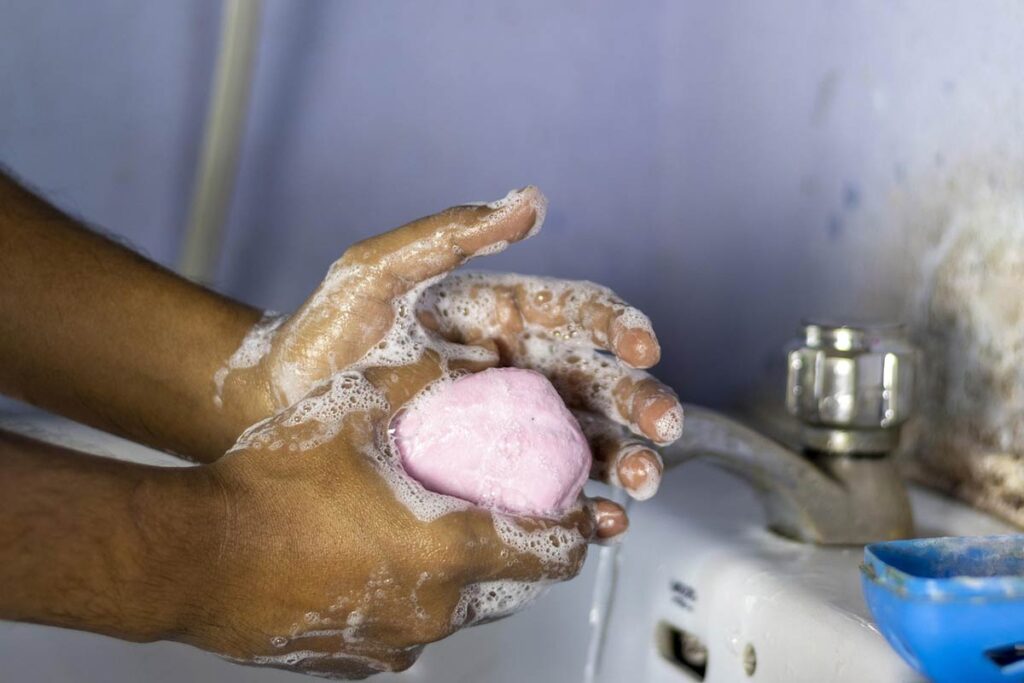
You turn off the tap, reach for a towel, and feel a sharp sting as you bend your fingers. The skin over your knuckles looks rough, and a small split catches whenever you make a fist.
Cracked knuckles can make necessary handwashing uncomfortable. A gentler routine starts at the sink and continues through dishes, cleaning, and the next wash.
You can keep cleaning your hands when needed while reducing some of the irritation around it.
Photo by soumen82hazra on Pixabay
In This Article
Why Handwashing Can Leave Knuckles Cracked
Repeated contact with water and soap can remove protective oils, leaving skin dry and irritated. Handwashing may be one contributor; existing eczema or contact allergy can also be involved.
In a Mayo Clinic discussion of increased handwashing, dermatologist Dawn Davis, MD, describes patients whose dermatitis flared, including some who had not previously considered their skin sensitive. She also explains that soap left between fingers or around wrists can cause irritation.
Soap that stays on your hands can keep irritating them after the tap is off. Our guide to protecting your skin barrier explains why cleansing habits matter.
Make Each Wash Gentler
The American Academy of Dermatology recommends continuing necessary handwashing and applying cream or ointment afterward.
Turn down the heat. Use lukewarm water and a gentle, fragrance-free soap. Lather all hand surfaces for at least 20 seconds.
Rinse thoroughly. Pay attention to spaces between fingers and around rings, where soap can linger.
Pat gently. Use a clean towel without scrubbing sore skin.
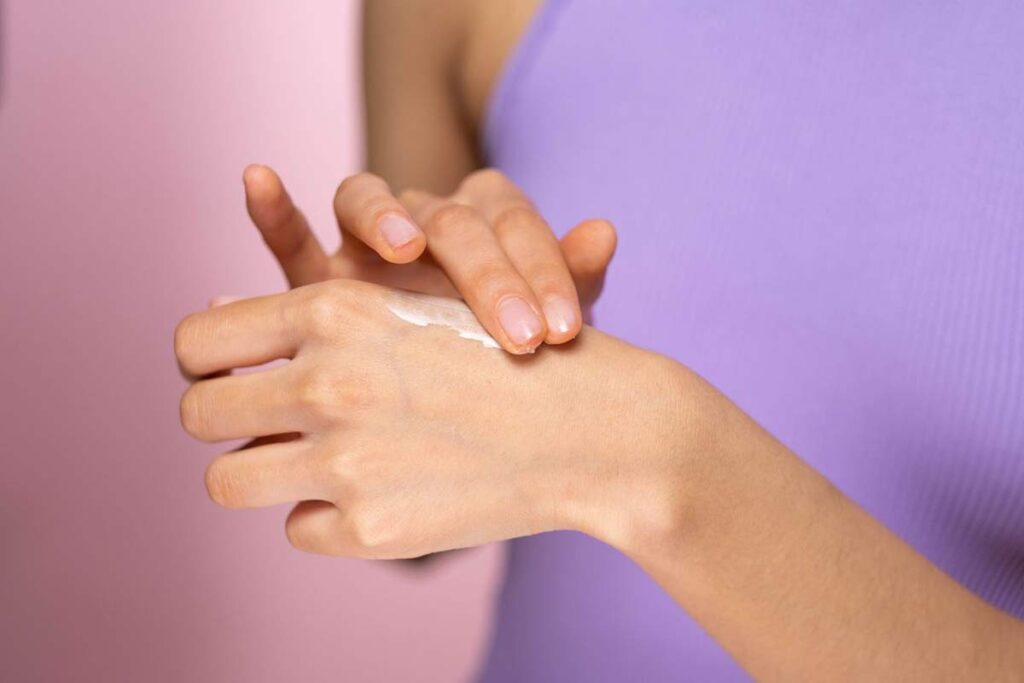
Moisturize straight afterward. Apply fragrance-free cream or ointment while the skin is still slightly damp, including over your knuckles.
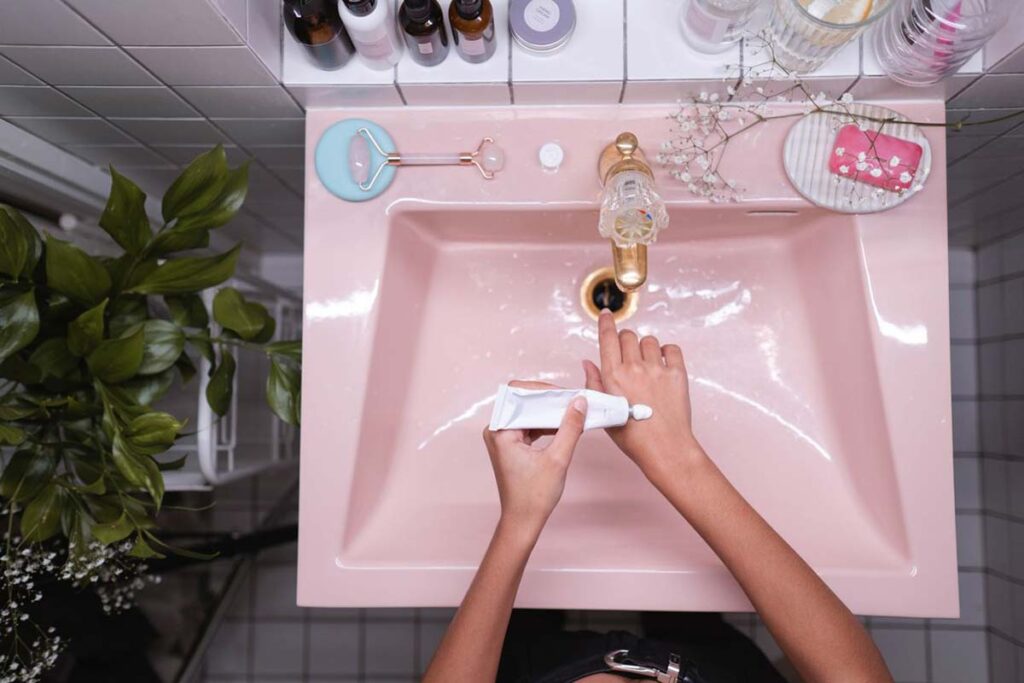
Make moisturizing the last step of each wash. Keep a product you already tolerate beside the sink so it is easy to reach.
Protect Your Hands Between Washes
Two minutes of washing dishes can become twenty when you wipe the counters and rinse a few mugs. Count dishwater and cleaning as hand exposures, too.
Use waterproof gloves for dishes and cleaning, with cotton liners if needed for comfort. DermNet notes that sweating inside gloves can aggravate hand dermatitis, so take breaks and replace damp liners.
Put gloves on dry hands and let reusable gloves dry inside before the next use. A damp glove can turn a protective step into another source of discomfort.
If choosing a comfortable texture is the sticking point, our guide to hand cream vs hand lotion can help you compare the options.
Try This Today
For one day, jot down what touched your hands just before they started stinging, including soaps, cleaners, and gloves. A short record can make recurring triggers easier to discuss with a dermatologist.
When Cracked Knuckles Need Medical Care
Book an appointment if cracks keep reopening, symptoms persist despite gentler care, or itching, blisters, or pain interfere with everyday tasks. Hand eczema and contact allergy may need assessment and treatment beyond moisturizer.
If a rash repeatedly follows the shape of a glove cuff, mention that pattern at your appointment. A dermatologist may suggest patch testing to check for contact allergens.
Seek prompt medical advice for rapidly worsening symptoms, discharge, increasing pain, or feeling unwell or feverish; the NHS lists these as possible signs of infection.
Frequently Asked Questions
Do cracked knuckles need antibacterial soap?
For everyday handwashing, the CDC recommends plain soap; antibacterial soap has not shown added health benefits for consumers. Healthcare workers should follow their workplace requirements.
Does stinging always mean I am allergic to my hand cream?
No. Irritated or cracked skin can sting, while contact allergy is another possibility. Stop using a product that repeatedly burns or brings on a rash, and seek advice if this continues. Our guide to signs of sensitive skin explains how these symptoms can overlap.
Final Thoughts
Start with the wash you repeat most often: comfortable water, thorough rinsing, a gentle pat dry, and moisturizer within reach. A crack that keeps reopening deserves a closer look.
When do your knuckles feel most sore after washing?
Tell us which soap or hand-care habit you have changed.
Share your experience in the comments below.