

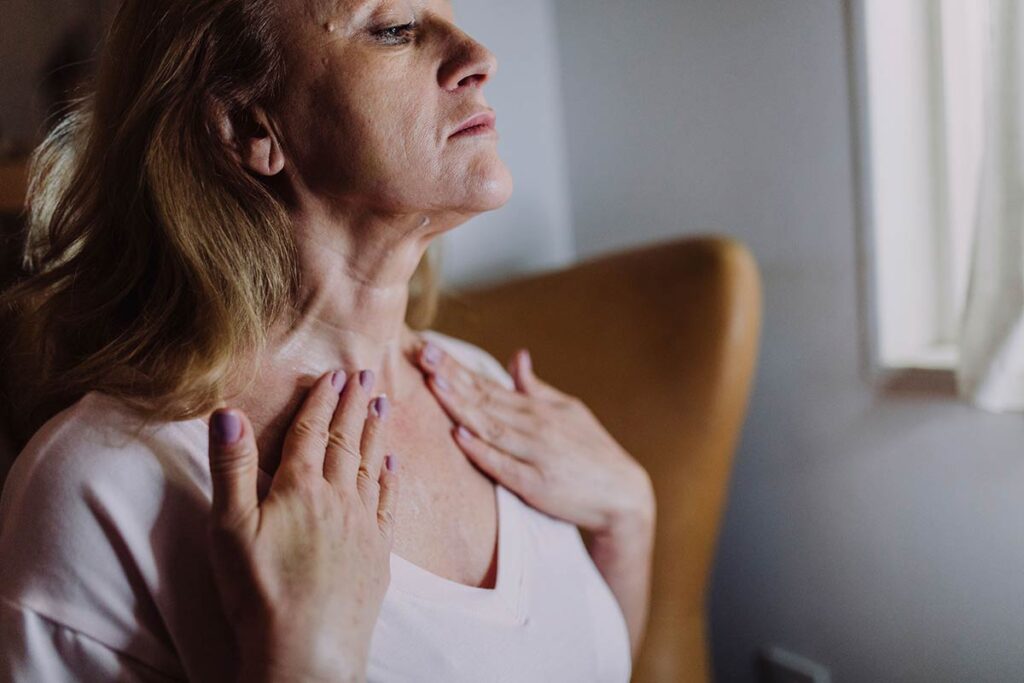
Your moisturizer has not changed. Your cleanser is the same. Yet suddenly your face feels tighter, your legs itch after a shower, and the cream that once felt rich enough disappears almost as soon as you apply it.
For many women, dry skin becomes more noticeable during perimenopause and menopause. Hormonal changes are part of the reason, but age, sun exposure, climate, and the products you use still matter too.
Photo by RDNE Stock project on Pexels
Why Does Skin Get Drier During Menopause?
Estrogen does more than regulate your menstrual cycle. It also supports processes involved in skin hydration, oil production, thickness, and elasticity.
As estrogen levels decline, skin may hold water less effectively and produce less of the natural oils that help keep its surface comfortable. The American Academy of Dermatology notes that menopausal skin can become dry, thin, and more easily irritated, especially when the surrounding air is dry.
That change can feel surprisingly sudden.
What Menopausal Dry Skin Can Feel Like
Dryness does not always mean obvious flakes. You may first notice tightness after cleansing, makeup catching around fine lines, itching on your arms or legs, or products that suddenly sting.
Skin may also become less tolerant of routines you used comfortably for years. A strong foaming cleanser, frequent exfoliation, or nightly retinoid use can start to feel like too much.
If moisturizer no longer seems to solve the discomfort, learn why your skin can feel tight even after moisturizing.
A Pattern Dermatologists See in Real Life
Harvard dermatologist Rachel Reynolds, MD, describes a familiar pattern: women whose skin had been relatively trouble-free may begin developing new dryness as they get older, with the first several years after menopause sometimes being particularly noticeable.
She explains that falling estrogen contributes to lower skin moisture, while winter air and indoor heating can make the problem even more obvious.
That matters because it changes the question from “What am I doing wrong?” to “Does my routine still match the skin I have now?”
How to Care for Dry Skin During Menopause
Switch to Gentler Cleansing
If your face feels tight immediately after washing, try a mild, non-foaming cleanser and lukewarm rather than hot water.
Cleveland Clinic dermatologist Kiyanna Williams, MD, recommends gentle cleansing for postmenopausal dryness and advises moisturizing while the skin is still slightly damp. She also suggests avoiding fragrance, added color, and drying alcohols when skin has become more sensitive.
Use a Richer Moisturizer When You Need One
The lotion that worked at 35 may simply not be enough at 50.
Look for ingredients such as glycerin, hyaluronic acid, ceramides, squalane, or petrolatum, depending on how dry your skin feels. Creams generally provide more support than lightweight lotions when moisture loss becomes more noticeable.
Apply moisturizer soon after bathing or cleansing rather than waiting until skin already feels tight.
If you are unsure whether your skin lacks oil or water, these signs your skin is dehydrated can help you tell the difference.
Be Careful With “More” Skincare
Dry menopausal skin is not necessarily asking for more exfoliation, stronger acids, or another active serum.
If basic products sting or your skin is visibly flaky, simplify for a while. Gentle cleanser, moisturizer, and broad-spectrum SPF may be a better short-term routine than trying to polish away the dryness.
When skin becomes easily irritated, focus first on habits that protect your skin barrier naturally.
Do Not Forget Sunscreen
Menopausal skin also becomes thinner over time, making sun protection especially important.
Use broad-spectrum SPF 30 or higher every day on exposed skin. Sunscreen will not reverse dryness, but it helps limit additional UV damage that can worsen texture and visible aging.
If dryness is making it difficult to choose a comfortable daily cream, compare our best moisturizers for dry and sensitive skin.
When Dry Skin May Need a Dermatologist
Dryness linked to menopause often responds to a gentler routine, but not every itchy or flaky patch is hormonal.
See a dermatologist if your skin remains very dry despite regular moisturizing, becomes painful, develops persistent redness or a rash, cracks or bleeds, or suddenly changes in a way that concerns you. Conditions such as eczema, contact dermatitis, psoriasis, or another medical issue can sometimes look like “ordinary” dry skin.
If dryness has made you more cautious with active ingredients, our guide to the best retinol serums for women over 40 highlights gentler options that may fit mature, moisture-hungry skin.
Final Thoughts
Menopause can change what your skin needs, even if your routine worked beautifully for years.
Start by making the routine kinder, not more complicated. Give your skin more moisture, less irritation, and consistent sun protection, then adjust slowly based on how it responds.
Explore more BloomHerLife skincare guides to build a routine that works with your changing skin rather than fighting against it.
Did your skin become noticeably drier during perimenopause or menopause?
Have you changed your cleanser, moisturizer, or other parts of your routine?
Share your experience in the comments — what helped your skin may also help another woman navigating the same change.