

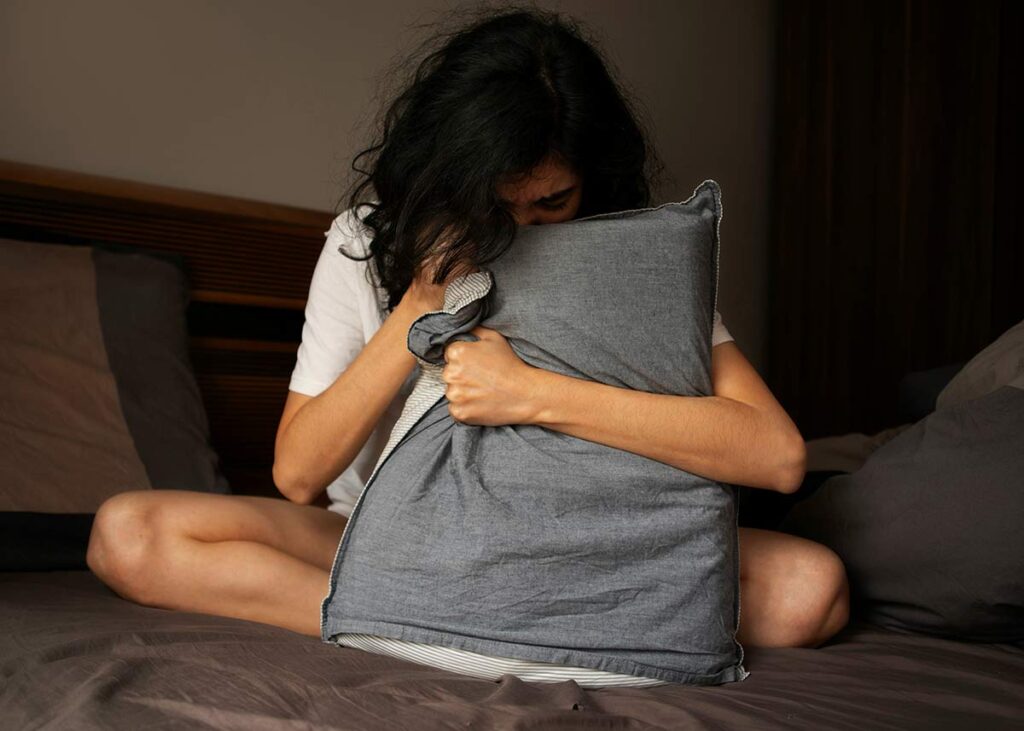
You wake suddenly and throw off the covers. Your chest and neck feel hot, your pajamas are damp, and a few minutes later you are cold enough to pull the blanket back up.
Then, just when you start drifting off again, it happens once more.
Perimenopause night sweats are nighttime hot flashes, and for some women, the real problem is not the sweating itself. It is the repeated interruption of sleep that follows.
Photo by Solving Healthcare on Unsplash
Why Do Night Sweats Wake You Up?
During perimenopause, estrogen and other hormone levels become less predictable. These changes can affect the brain systems involved in controlling body temperature, making your body react to relatively small temperature shifts as though it suddenly needs to cool down.
A wave of heat may be followed by sweating, a faster heartbeat and then chills as your body cools. That uncomfortable sequence can be enough to pull you out of sleep.
Research Highlight
Researchers who objectively tracked 168 midlife women found that wake episodes occurred alongside 78% of objectively measured nighttime hot flashes. In other words, women are not simply imagining that hot flashes wake them — the connection can be measured during sleep.
If you regularly wake at roughly the same time as well, read why you wake up around 3 AM.
What It Can Look Like in Real Life
In a published iCliniq doctor Q&A, a 42-year-old woman in perimenopause described months of severe sleep trouble. She would finally fall asleep, only to wake around 3 or 4 AM, while also dealing with hot flashes, work stress and daytime exhaustion.
Her experience shows how quickly the problem can become bigger than one uncomfortable night. Repeated waking can start affecting concentration, mood and everyday functioning.
That is also why perimenopause brain fog may feel much worse after several broken nights.
Expert Insight
Cleveland Clinic menopause specialist Dr. Pelin Batur puts the impact simply: “If you’re not getting a good night’s sleep because of night sweats, then they become more than just a nuisance.”
The important point is that you do not have to wait until symptoms become unbearable before discussing them with a healthcare professional.
Simple Ways to Make Nights More Comfortable
You cannot always prevent a night sweat, but you can make it easier for your body to cool down without completely waking yourself up.
Keep the bedroom comfortably cool and use light, removable layers of bedding rather than one heavy comforter. Lightweight cotton or linen sleepwear may also feel better when sweating starts.
A fan and cold water beside the bed can help. If alcohol, caffeine, spicy foods or a very warm evening meal seem to trigger episodes for you, experiment with reducing them later in the day.
Cleveland Clinic also notes that treatment may include lifestyle changes, menopausal hormone therapy or nonhormonal prescription options, depending on the cause, severity and individual health history.
For a wider look at nighttime hormonal changes, see how hormones affect sleep.
When Night Sweats Deserve a Medical Check
Night sweats in your 40s may fit the perimenopause picture, particularly when they arrive with changing periods, hot flashes or other familiar symptoms. But not every night sweat is hormonal.
The Menopause Society recommends medical evaluation when sweating is accompanied by symptoms such as unexplained weight loss, fever or swollen glands. Medications, sleep apnea, thyroid problems, infections and other conditions can also cause nighttime sweating.
Talk with your healthcare professional if night sweats are new, severe, frequent or repeatedly disrupting your sleep.
If your bedding seems to trap heat and make nighttime hot flashes harder to manage, we compared 5 cooling blankets for menopause night sweats and hot sleepers to help you find a more comfortable option.
Final Thoughts
Perimenopause night sweats can turn an ordinary night into a frustrating cycle of heat, sweat, cold and wakefulness.
Small changes to your sleep environment may help, but you do not have to treat months of broken sleep as something you simply have to endure. If symptoms are affecting your energy or quality of life, bring them up with your healthcare provider – there are treatment options worth discussing.
What about you?
Do night sweats wake you once in a while, or have they started interrupting your sleep night after night?
Share your experience in the comments below — your story may help another woman feel less alone.