

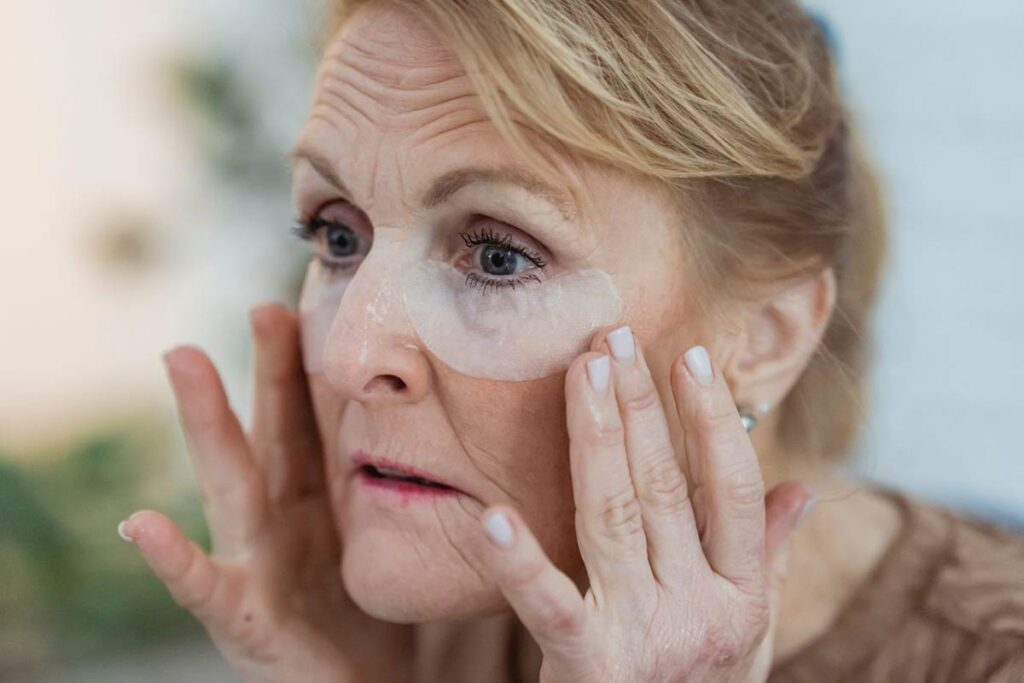
Maybe you bought a retinol because everyone seems to call it an anti-aging essential. You use a small amount at night — and two days later your cheeks feel tight, your moisturizer stings, and makeup catches on tiny flakes around your mouth.
Starting retinol after 40 can feel especially frustrating when your skin is already drier or more reactive than it used to be.
Retinol can still have a place in your routine. But the goal is not to make your skin tolerate the strongest formula possible. It is to find a routine your skin can comfortably keep using.
Photo by Teona Swift on Pexels
Why Retinol After 40 May Feel Different
Skin often becomes drier and thinner as hormone levels change around menopause, and its ability to hold water can decrease. That can make an ingredient you might have tolerated easily years ago feel much more noticeable now. The American Academy of Dermatology notes that menopausal skin can become dry, slack and thin as hormone levels fall.
Your skin has changed. Your retinol strategy may need to change with it.
If familiar products have suddenly started to sting or feel too strong, read more about why skin can become more sensitive in your 40s.
If dryness is already one of your main concerns, strengthening moisture and barrier care first may make the eventual introduction of retinol much easier.
You can also learn more about why menopause can make your skin so dry and what may help restore comfort.
Start With Tolerance, Not Strength
With retinol after 40, starting slowly is often more useful than starting strong.
You do not earn better results by making your face peel.
For sensitive or reactive skin, dermatologist Haleh Bakshandeh, MD, recommends introducing retinol slowly – even once or twice a week for the first several weeks — and pairing it with a barrier-supporting moisturizer.
A simple approach might look like this:
- start with a lower-strength retinol
- use it only one or two evenings a week
- increase frequency only when your skin feels comfortable
- do not increase strength and frequency at the same time
A retinol you can use consistently is more useful than a stronger one you keep having to stop.
What a Simple Retinol Night Can Look Like
Retinol nights do not need seven other active products.
Cleanse gently, let your skin dry, and apply approximately a pea-sized amount over the face rather than treating each wrinkle individually. Follow with moisturizer. Cleveland Clinic also recommends patch testing before first use and starting gradually because dryness, redness, peeling, itching or burning can occur.
If your skin is very dry, applying moisturizer before retinol can provide an extra buffer.
And the next morning? SPF 30 or higher. Sun protection matters every day, but it becomes especially important when you are using retinoids.
Mild Dryness Is One Thing. Burning Is Another.
A real reader in her mid-40s wrote to physician Jennifer Grant after products that once felt comfortable began making her skin sore and sting. She had also been using retinol at night for several months.
Dr. Grant’s assessment was straightforward: “It’s more likely that the use of retinol may be causing increased sensitivity.”
A little dryness during the adjustment period can happen. Persistent burning, painful redness, swelling, cracked skin or irritation that keeps getting worse is different.
You do not need to “push through” an angry skin barrier to make retinol work.
Keep the Rest of Your Routine Boring at First
This is not the best moment to introduce a new exfoliating acid, scrub, strong vitamin C serum and retinol all in the same week.
If exfoliation is already part of your routine, our guide explains how often you should exfoliate for your skin type.
The American Academy of Dermatology recommends starting with one anti-aging product at a time, because using several together can irritate the skin and even make signs of aging appear more noticeable.
For the first few weeks, think simple:
gentle cleanser → moisturizer → retinol → moisturizer if needed.
Once your skin is stable, other actives can be reintroduced gradually rather than all at once.
When Retinol May Not Be the Best DIY Experiment
Retinol is not automatically right for every woman over 40.
The AAD advises extra caution if you already have significant dryness, skin allergies, redness or inflammation. Women with pronounced redness or possible rosacea should discuss alternatives with a dermatologist rather than simply increasing retinol exposure. Retinoids should also not be used during pregnancy.
If irritation continues despite reducing frequency and simplifying your routine, that is another good reason to stop experimenting and have your skin assessed.
Frequently Asked Questions
Is it too late to start retinol after 40?
No. Retinol can still be used for concerns such as fine lines, uneven texture and pigmentation after 40. Your age matters less than choosing a formula and frequency your skin can tolerate.
Should I put moisturizer before or after retinol?
Either approach may work. Women with dry or sensitive skin often find that moisturizer before retinol reduces irritation; moisturizer afterward can provide additional comfort.
How long does retinol take to work?
Do not judge it after a week. Depending on the concern and product, visible changes can take several weeks to several months, so consistency matters more than rushing to a stronger formula.
Does peeling mean retinol is working?
Not necessarily. Peeling tells you that your skin is reacting to the product; it is not a measurement of how well collagen, pigmentation or fine lines are improving.
Once you’re ready to choose a formula, see our 5 best retinol serums for women over 40 for options ranging from budget-friendly and hydrating picks to barrier-supporting formulas.
Final Thoughts
Starting retinol after 40 does not need to become a test of how much irritation you can tolerate.
Begin gently. Moisturize generously. Give your skin time.
If changes in texture are also showing on your face or neck, see what may contribute to crepey skin on the face and neck.
And remember the most useful shift of all: stronger skincare is not automatically better skincare – especially when your skin has become drier or more sensitive with age.
Have you started using retinol in your 40s — or found that your skin tolerates it differently than it used to?
Did using it less often or adding more moisturizer make a difference?
Share your experience in the comments — it may help another woman who is trying to find the right balance.